2. Remedy Evaluation Framework
Technical complexity at contaminated sediments sites arises from the physical, chemical, and biological characteristics of the site, spatial variability, and changes that the system undergoes during and after remedial activities (for example, a change in contaminant bioavailabilityThe relationship between external (or applied) dose and internal (or resulting) dose of the chemical(s) being considered for an effect (NRC 2003). or characteristics of the sediment bed). Because of the inherent complexity of these projects, site characteristics (such as source areas, transport mechanisms, background and upstream areas, and key site features) should be clearly identified in a CSMconceptual site model before evaluating and selecting remedial alternatives. This chapter provides guidance for selecting appropriate remedial technologies based on these site-specific conditions.
The stepwise selection approach presented here includes a series of tables and worksheets that help identify applicable remedial technologies to achieve RAOsremedial action objectives for a site or zone within a site. Overviews of these remedial technologies are provided in subsequent chapters. While the list of potential site characterization needs for remedy selection is extensive, the data for all of the characteristics listed in Table 2-2 and Table 2-4 may not be required for remedy selection at every site. Specific data requirements are a function of the water body being evaluated, the CSM, and site-specific conditions.
Although sediment remediationThe act or process of abating, cleaning up, containing, or removing a substance (usually hazardous or infectious) from an environment. is often completed under federal or state cleanup programs, these projects should also be considered within the context of broader goals to revitalize and restore the watershed. From the beginning, site managers should coordinate and communicate with stakeholders to achieve broader watershed goals (see ASTSWMO 2009). Stakeholder concerns (including those of tribal stakeholders) are addressed in Chapter 8.
 About the Remedy Evaluation Framework
The remedy evaluation framework presented here assists in selecting remedial technologies and evaluating remedial alternatives that are applicable to contaminated sediment sites based on site-specific conditions. The effectiveness, feasibility, and cost of the remedies presented here depend on site specific physical, chemical, and biological characteristics and other risk-related factors. Consult the site characteristics described in Table 2-2, Table 2-3, and Table 2-4 (and in more detail in the subsequent technology overview sections) during the remedial investigation (RI) stage of a project to identify factors that affect the evaluation of technologies and selection of a remedy.
The framework includes worksheets for preliminary screeningThe comparison (by ratio, usually the environmental medium concentration divided by a benchmark, standard, criterion, or similar value) of site conditions to a screening value. Often this is synonymous with “compare to a list that is readily available.” and then detailed evaluation of up to seven technologies: monitored natural recovery (MNR), enhanced MNR (EMNR), in situ treatment (IST), conventional capping, amended capping, and removal through dredging or excavation. After favorable remedial technologies are screened in based on site-specific characteristics, the framework describes key parameters used to develop and evaluate remedial alternatives.
In selecting remedial alternatives, consider factors beyond site-specific characteristics such as the ability of a specific remedial technology to achieve RAOsremedial action objectives, long term effectiveness, technical feasibility, regulatory acceptance, stakeholderAffected tribes, community members, members of environmental and community advocacy groups, and local governments. concerns, sustainability, and costs (see Section 2.9). Often, one or more of these factors are given more weight than others in the final selection of a remedial alternative. Recent innovations in multi-criteria decision analysis (MCDA) provide systematic approaching assigning weights to various evaluation factors. Section 2.9 describes various approaches and criteria that can be used in this evaluation, but ranking their importance is left to the parties involved in remedy selection. Experienced, professional judgment must be applied in evaluating site-specific criteria to identify the best remedial technologies for a particular site.
Remedy Evaluation Framework Steps and Decision Matrix Flow Chart
Steps in the remedy evaluation framework are shown in Figure 2-1 and include the following:
- Step 1. Review Site Characteristics – Review site-specific data to confirm that sufficient information is available to effectively evaluate remedial technologies. Site specific characteristics are grouped into physical, sediment, contaminant, and land and waterway use categories.
- Step 2. Identify and Map Remedial Zones – Delineate the site into one or more remedial zones to identify applicable technologies. Zones can be based on risk, contaminant concentration and extent, contaminant type, physical characteristics and other distinct site characteristics or combinations of characteristics. This step can also identify potential early action candidate areas.
- Step 3. Screen Remedial Technologies – Evaluate technologies based on general criteria first, and screen out obviously inapplicable technologies prior to the detailed evaluation.
- Step 4. Evaluate Remedial Technologies – Use a lines-of-evidencePieces of evidence are organized to show relationships among multiple hypotheses or complex interactions among agent, events, or processes. A weight of evidence approach includes the assignment of a numeric weight to each line of evidence. approach to evaluate relevant site characteristics for each remedial zone and to determine which technologies are most favorable within each remedial zone. Lines of evidence and TAGstechnology assessment guidelines may also be used to screen remedial technologies at this stage of the evaluation. A TAG is a rough and practical guideline based on experience rather than a scientific or precise guide based on theory. This approach helps to evaluate applicable technologies based on site-specific physical, contaminant, sediment, and land and waterway use data and characteristics.
- Step 5. Develop Remedial Action Alternatives – Develop remedial alternatives by assembling combinations of technologies into alternatives that address contamination on a site-wide basis. This guidance provides a general set of principles to assist with the development of remedial alternatives. Alternatives should be developed for all remedial zones and may consist of technologies applied in combination (such as dredge and capA covering over material (contaminated sediment) used to isolate the contaminants from the surrounding environment.).
- Step 6. Evaluate Remedial Action Alternatives – Evaluate remedial alternatives, considering factors such as the ability to meet RAOs, long-term effectiveness, short-term impacts, technical feasibility, administrative feasibility, practicality, cost and schedule, green and sustainable remediation, habitat and resource restoration, watershed considerations, and future land and waterway use.
The steps presented here generally follow the Comprehensive Environmental Response, Compensation, and Liability Act (CERCLA) feasibility study (FS) or Resource Conservation and Recovery Act (RCRA)Enacted in 1976, this provides a comprehensive management scheme for hazardous waste disposal. This includes a system to track the transportation of wastes and federal performance standards for hazardous waste treatment, storage, and disposal facilities. Open dumps are prohibited. corrective measures study (CMS) process. The remedy evaluation framework does not replace these processes but rather develops a structured approach for evaluating remedial options at contaminated sediment sites. For example, CERCLA RI/FS guidance from USEPA describes a remedial technology screening step. This ITRC guidance document provides specific information for screening remedial technologies applicable to contaminated sediment sites based on site specific information. Similarly, the NCP describes the remedial action alternative evaluation criteria to be used under CERCLA. This ITRC guidance provides guiding principles for the development and evaluation of remedial action alternatives specific to contaminated sediment sites. Finally, the technology screening steps and guiding principles in this guidance document are applicable to both federal and state environmental cleanup programs.
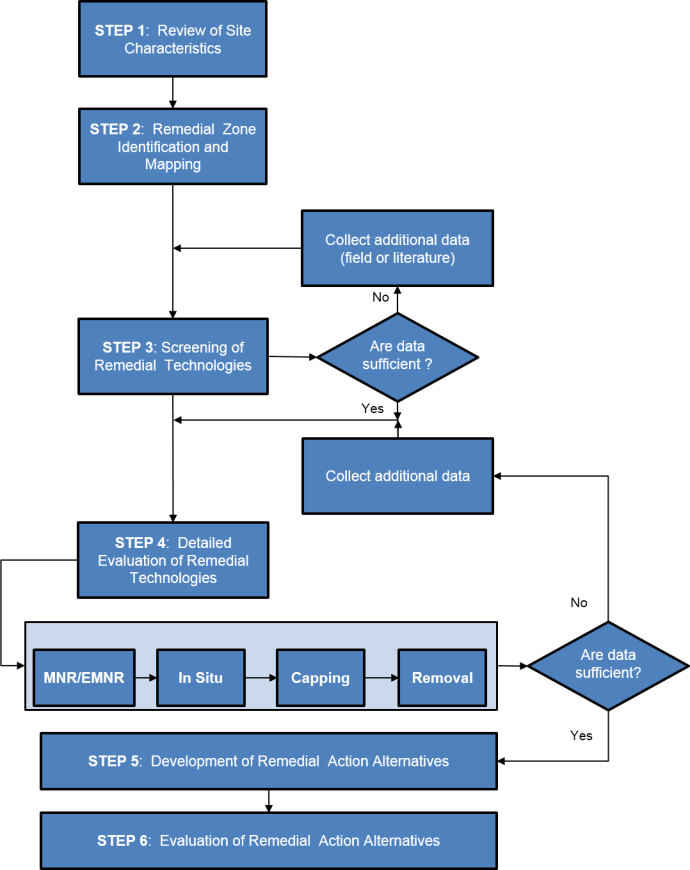
Figure 2-1. Decision matrix flow chart.
Use this framework early in the investigation process to plan the collection of data necessary to evaluate remedial technologies and develop an appropriate remedy.
2.1 Relationship of the Framework to the Technology Overviews
Evaluating remedial technologies requires site-specific information, usually collected during the site characterization phase (remedial investigation). Although the site characterization phase often focuses on establishing the nature and extent of contamination and assessing site risks, the site characterization data needs presented in Table 2-2 should be reviewed to ensure that the data necessary for remedy selection is collected as well. In order to avoid collecting unnecessary data, an iterative approach should be used in order to reduce the uncertainty in the CSM to an acceptable level. To help evaluate site-specific data requirements, two reference tables (Table 2-2 and Table 2-4) are provided. Table 2-4 is linked to the technology overviews. In addition, two worksheet tables are provided (Table 2-3 and Table 2-5). These tables can be used in assimilating and documenting how the reference information applies to site characteristics on a zone-by-zone basis.
Read more on reference and worksheet tables
- Table 2-2, Summary of site characterization needs for contaminated sediment site and provides details of site characterization needs by type (physical, sediment, contaminant, land and waterway use) for contaminated sediment sites and a summary of the implications of each characteristic on remedy selection.
- Table 2-3, Initial screening of remedial technologies worksheet and presents a worksheet that can be used to screen remedial technologies and identify those that are potentially applicable for each zone.
- Table 2-4, Summary of key site characteristics for remedial technologies and links to TAGs, identifies which data are most important for the evaluation of specific remedial technologies and includes links to applicable sections of each technology overview.
- Table 2-5, Remedial technology evaluation worksheet and presents a worksheet for the detailed evaluation of applicable remedial technologies for each remedial zone.
The technology overviews (MNR/EMNR, in situ treatment, capping, and removal) provide technology-specific details and insight for use in screening and evaluating remedial technologies. To the extent possible, TAGs are used to evaluate site data and are provided in these technical overviews as they pertain to each technology.
2.2 Role of Background Conditions
The term "background" typically refers to substances, conditions, or locations that are not influenced by the releases from a site, and are usually described as either naturally occurring (consistently present in the environment but not influenced by human activity) or anthropogenic (influenced by human activity but not related to specific activities at the site). For example, a number of inorganic metals occur naturally in the soils of specific regions or states due to geologic processes and the mineralogy of the parent bedrock material. Some organic chemicals, such as polychlorinated biphenyls (PCBs), are anthropogenic substances, but have detectable concentrations because they are ubiquitous in the environment and often have long-range, atmospheric transport contributions not related to localized activities. Other organic compounds, such as polynuclear aromatic hydrocarbons (PAHs), have both naturally occurring and anthropogenic sources and are often associated with increasing urbanization, which causes increases in car emissions and street dirt. Many states use the terms natural background, urban background, area background, or regional background to distinguish between different spatial or land use conditions affecting chemical concentrations in a particular region or area. State and USEPA regions may have different definitions and requirements for assessing background conditions as part of environmental site assessments.
Background or reference conditions must be considered in virtually all stages of sediment investigations, remedial technology evaluations, and remedial response actions. This section focuses on background sediment chemistry that is most relevant for selecting and screening remedial technologies but does not address reference areas in terms of toxicity testing for risk assessments.
During remedy selection, background can be used to help develop site-wide remedial goals and prioritize source controlThose efforts that are taken to eliminate or reduce, to the extent practicable, the release of COCs from direct and indirect ongoing sources to the aquatic system being evaluated. efforts. While it is not technically feasible to remediate to below background levels, knowledge of background conditions can help determine goals for a project and estimate when the goals will be met. If the site is larger, source control and remediation efforts may be complimentary, concurrent activities, and knowledge of background conditions may help prioritize and sequence the remedial actions.
The ITRC document Incorporating Bioavailability Considerations into the Evaluation of Contaminated Sediment Sites (CS-1) (ITRC 2011a) provides guidance on the role and purpose of background data when evaluating site conditions, risks, and chemicals of potential concern. Typical questions that may be asked when evaluating background data sets at sediment sites include:
- Do the sample concentrations vary with depth?
- Does the particle size distribution or the organic carbon profile indicate that relatively high concentrations tend to occur only in certain types of sediments?
- Does the estimate of the upper bound range depend on nondetect values?
- Does the sample distribution indicate spatial groupings within the site? Are site data consistent with background? Are there temporal variations or indications that the background distribution may be changing?
- What are the concentrations associated with ongoing lateral and upstream sources to the site that can be expected after sediment remediation is complete?
2.2.1 Determination of Background
Background conditions and concentrations for sediment sites are typically determined from reference samples (obtained from upstream or areas unaffected by site-related sources) and may include the following:
- Sediment samples are typically surface grab samples but could also be selected from deeper sediment core intervals that represent pre-industrial horizons.
- Surface water samples are collected from lateral or upstream stations entering the site. The samples can be discrete samples (grab) or composite samples (collected over time or integrated over the height of the water column1) The basic habitat and the medium through which all other fish habitats are connected; 2) a conceptual column of water from surface to bottom sediments. This concept is used chiefly for environmental studies evaluating the stratification or mixing (such as by wind induced currents) of the thermal or chemically stratified layers in a lake, stream or ocean. Some of the common parameters analyzed in the water column are: pH, turbidity, temperature, salinity, total dissolved solids, various pesticides, pathogens and a wide variety of chemicals and biota. Understanding water columns is important, because many aquatic phenomena are explained by the incomplete vertical mixing of chemical, physical or biological parameters. For example, when studying the metabolism of benthic organisms, it is the specific bottom layer concentration of available chemicals in the water column that is meaningful, rather than the average value of those chemicals throughout the water column.). Contaminant concentrations of suspended solids within a surface water sample maybe used to develop estimates of levels of deposited sediment.
- Total suspended solids (particulates) samples are typically collected from stormwater or combined sewer overflow (CSO) outfalls, sediment traps, catch basins, or atmospheric collection traps at locations where water is entering the site or watershed. These samples indicate ongoing background contributions to the sediment bed. Concentrations of suspended solids within a surface water sample may be used to develop estimates of levels in deposited sediment.
- Residue samples are typically collected from biota (fish, invertebrates).
- Community level assessments typically include benthic invertebrate metrics.
- Ranges of background concentrations published by agencies or information in the literature may also be reviewed.
Background data are variable, and samples typically reflect a range of concentrations due to temporal and spatial heterogeneity. Therefore, consider several factors when determining background concentrations from field-collected data (NAVFAC 2003a; WDOE 1992):
- Statistical Considerations of Data
- distribution of the data (such as lognormal)
- statistical methods for analyzing background data (probability plots, multiple inflection points, percentiles, geochemical associations, comparative statistics)
- statistical methods for comparing background data to site data, including sample sizes and statistical detection and uncertainty effects; minimum of 5 to 15 samples typically needed depending on data variability (for example, number of nondetects, and minimum confidence levels), measurement endpoints (such as 90th percentile), and confidence levels (such as 95% confidence on the 90th percentile concentration)
- Sampling Locations and Spatial Considerations
- data location, such as other water bodies with similar physical conditions or upstream and lateral inputs entering the site
- temporal trends evident in sediment cores or distribution of data within the site
- Physico-chemical Factors
physical and chemical factors (such as total organic carbon, particle surface area, and particle size distribution), which correlate with chemical concentrations in sediments and must be considered when defining background concentrations (ITRC 2011a)
Two USEPA documents, Guidance for Comparing Background and Chemical Concentrations in Soil for CERCLA Sites (USEPA 2002a) and Role of Background in the CERCLA Cleanup Program (USEPA 2002b), also provide guidance on determining background concentrations and comparing background to site concentrations. Depending on the data quality objectives (DQOs) and risk-based cleanup levels, concentrations may be compared as point values (either statistical or threshold), as population comparisons (significant differences from reference areas), or spatially-weighted average concentrations. Several state and federal agencies periodically collect regional background data for soils and sediments to determine background concentrations and monitor changes in sediment quality as part of ambient monitoring programs. While not a complete list, these agencies include Washington State Department of Ecology, Michigan Department of Natural Resources, San Francisco Regional Water Quality Board, Oregon Department of Environmental Quality, and the National Oceanic and Atmospheric Administration (NOAA) Status and Trends Program. Washington State, in particular, has started developing area background concentrations for several marine water bodies in Puget Sound (WDOE 2013). These results will be incorporated into the revised State Sediment Management Standards.
2.2.2 Using Background Data
A background data set or threshold value, once calculated, can be used in many stages of a site cleanup including:
- determining if a release has occurred
- determining site boundaries and evaluating site conditions (nature and extent of contamination)
- distinguishing chemicals of potential concern from background chemicals to help refine the list of chemicals of concern
- establishing a cleanup standard from background data
- using reference areas that are physically, geochemically, and ecologically similar to the site to help evaluate the significance of observed effects and risks from chemical exposure
- establishing RAOs
- establishing performance criteria to evaluate compliance monitoring data
- evaluating recontamination potential after remedy implementation (applicable to all remedial technologies)
- assisting with risk communication to the public and stakeholders
For baseline risk assessments, chemicals of potential concern detected at concentrations below background are discussed in the risk characterization, but cleanup levels are not set below the upper bound of the background range (NAVFAC 2003a; USEPA 2005a). Many states consider background concentrations when formulating cleanup levels and recognize that setting numerical cleanup goals at levels below background is not feasible because of the potential for recontamination to the background concentration. Contaminants with elevated background concentrations should be discussed in the risk characterization summary so that the public is aware of their existence, especially if naturally-occurring substances are present above risk levels and may pose a potential environmental or health risk (USEPA 2005a). If data are available, the contribution of background to site concentrations should be distinguished. In these cases, area-wide contamination may be addressed by other programs or regulatory authorities able to address larger spatial areas and source control needs.
When developing cleanup strategies, background concentrations can be used to develop achievable cleanup levels that consider anthropogenic sources, recontamination potential, and pre-remedial contaminant concentrations. In most cases, background conditions are relevant to all remedial technologies. Recontamination potential from ongoing, nonpoint sources is a concern to all sediment cleanup sites regardless of the action taken. For example, sediment caps and sand layers placed as a remedial technology or to manage dredging generated residuals can become recontaminated due to background conditions and areas that have been previously dredged could rebound to site equilibrium concentrations. Background concentrations can also be used to define long-term remedial targets that reflect future source control efforts and the recovery potential of the system. Long-term remedial targets support the overall goal of protecting human health and the environment, even when these targets are below existing background levels, especially for regions with sovereign tribal treaty rights.
Project Example: Lockheed Martin, Seattle WA
The Lockheed Martin Yard 2 marine sediment cleanup site in Seattle, Washington developed several different natural and area background concentrations that reflect different spatial areas, site conditions, and chemical inputs. Sediment samples were collected from reference areas, deep basin, middle bay, and inner bay areas (Table 2-1). A chemical gradient is observed with increasing concentrations from natural background areas toward the more urban shoreline (middle bay) where more outfalls, vessel traffic, and nonpoint source urban contributions are expected. In this project example, some of the middle bay urban background concentrations were used to develop remedial action levels for the site (for dredging and cappingTechnology which covers contaminated sediment with material to isolate the contaminants from the surrounding environment.), and some of the natural background concentrations were used to develop long-term remediation goals (USEPA 2013b).
|
Parameter |
Units |
Puget Sound Natural Background (OSV Bold Study, USEPA 2009)c |
Elliott Bay Sediment Background – Urban Waters Initiative (Ecology 2007)a |
|
|---|---|---|---|---|
|
Deep Basin/ Outer Bay |
Middle Bay/ Urbanb |
|||
|
Arsenic |
mg/kg dw |
7 |
9.1 |
8.4 |
|
Copper |
mg/kg dw |
25 |
41 |
49 |
|
Lead |
mg/kg dw |
11 |
27 |
47 |
|
Mercury |
mg/kg dw |
0.10 |
0.18 |
0.44 |
|
cPAHs |
mg/kg dw |
9 |
125 |
757 |
|
Total PCBs |
mg/kg dw |
2 |
48 |
119 |
|
Dioxins/furans |
ng TEQ/kg dw |
2 |
NA |
NA |
|
Notes: NA = not analyzed a. These background data are affected by both point and nonpoint pollutant sources in Elliott Bay and are not representative of natural background. Calculated based on the 95th percentile of the upper confidence level (95 UCL). Two samples were taken from the outer bay, 13 samples from mid-bay, and 15 samples from inner bay. b. Some of the urban background concentrations were used to establish remedial action levels for sediment cleanup. c. Data is from the OSV Bold survey vessel study. Some of the natural background concentrations were used to establish long-term remediation goals for the project. Calculated based on the 95th percentile of the upper confidence level (95 UCL). 70 samples were taken. |
||||
Project Example: East River Site, New York NY
In a second project example from the East River Site in New York City, background levels were computed to achieve a range of PAH concentrations collected from depositional sediment areas located north and south of the site (upstream and downstream, n = 40 samples, 3 outliers removed). Background concentrations ranged from 60 to 116 mg/kg dry weight (dw) using several different statistical metrics (98th percentile of empirical data distribution function, upper prediction limit, 90th percentile of ranked data, and 95% UCL). An almost two-fold difference exists in the results from the different methods. The 90th percentile value (71 mg/kg dw) for total PAHs was selected as the background threshold value for the site (AECOM 2013).
2.2.3 Source Control and Background Conditions
Increased concern over the intersection of industrial pollution in the United States with population growth and urbanization has led to a greater need to understand the background concentrations of certain chemicals in the environment, and to determine reasonable and achievable, yet protective, cleanup levels. Controlling sources of contamination to a sediment site to the maximum extent practical, from both on-site and off-site sources, is an explicit expectation of a sediment cleanup, especially when monitored natural recovery is part of the remedial action or recontamination is of concern. The purpose of source control is to prevent ongoing releases of contaminants to the sediment bed at concentrations that would exceed the sediment cleanup levels. Understanding background concentrations can help to quantify ongoing inputs to the site from ambient sources. In general, background levels represent contaminant concentrations that are not expected to be controlled. These concentrations are the lower limit expected from source control efforts for a sediment site cleanup.
Source control may be managed as early actions and hotspot removals, managed as different operable units or cleanup sites, or managed through a separate regulatory program. A comprehensive source control strategy may call upon different regulatory programs and agencies to implement an area-wide strategy. These agencies can use their regulatory authority to promote source control in a variety of ways: source trace sampling, stormwater and CSO programs, hazardous waste and pollution prevention programs, catch basin and shoreline inspection and maintenance programs, permits, education and best management practices, water quality compliance and spill response programs, and environmental assessments. In some instances, long-term monitoring can be used to determine what the technically practical lower limits are for site concentrations, and where source control efforts should be focused.
Source control actions can take various forms, or may not be required at all in some instances. For example, enforcement of source control actions at the Thea Foss cleanup site in Washington State is addressed through an education campaign including encouraging marinas to get “EnviroStars” certification and preparing an "Only Rain in the Drain" campaign. For the Fox River cleanup site in Wisconsin, the remedy plan notes that point sources of contaminants are adequately addressed by water discharge permits for the Fox River and that no additional source control actions are necessary. For the Hudson River site in New York, a separate source control action near the General Electric (GE) Hudson Falls plant is being implemented by GE (under an administrative order issued by NYSDEC) in order to address the continuing discharge of PCBs from that facility.
2.2.4 Water Quality Standards and Background Conditions
Under CERCLA, state water quality standards are typically considered to be applicable or relevant and appropriate requirements (ARARs). Because ARARs are threshold requirements, water quality standards must be met or a waiver must be obtained (USEPA 1999a). At many sites, water quality standards for chemicals such as dioxins/furans and PCBs are not achievable due to background conditions. For example, at the Lockheed Martin Yard 2 site in Washington (USEPA 2013b), a technical impracticability (TI) waiver was used to waive the requirement to meet water quality standards because of technological limitations associated with the background condition. At sites where background concentrations exceed water quality criteria, consultation with federal and state cleanup and water quality authorities will be required to develop the appropriate approach for demonstrating that the proposed cleanup action complies with water quality requirements (for example, TI waiver, change water body use designation, or use other types of ARAR waivers).
2.3 Source Control
The framework for evaluation of remedial technologies presented herein assumes that source control has either been achieved or that sources are well understood and integrated with the sediment remedy to prevent recontamination. Identifying and controlling the sources of contaminants to an aquatic system is an integral component to remediating contaminated sediments and effective source control is a prerequisite for applying any of the remedial technologies described in this guidance (USEPA 2005a, Section 2.6):
In most cases, before any sediment action is taken, project managers should consider the potential for recontamination and factor that potential into the remedy selection process.
The Association of State and Territorial Solid Waste Management Officials (ASTSWMO) evaluated recontamination of sediment sites that had been remediated, including numerous case studies, and concluded that recontamination has been observed at a number of sites where contaminated sediments had been remediated, highlighting the importance of adequate source controlThose efforts that are taken to eliminate or reduce, to the extent practical, the release of CoCs from ongoing sources which could adversely affect the aquatic system being evaluated. (ASTSWMO 2013). As a result, characterization should include ongoing sources that may adversely affect the aquatic system and potentially prevent attainment of remedial objectives. Sediment remediation is unlikely to be effective unless sources that could result in unacceptable sediment recontamination have been identified and controlled to the extent practical.
Sources that should be controlled can include the following:
-
In-water sources. These sources are characterized by elevated sediment contaminant concentrations associated with current or historical releases to the water body that represent an ongoing source of contamination to downstream or adjacent areas of the water body. In-water sediment sources may result in recontamination if not addressed through sediment remedies. As part of an adaptive management approach to remediating sediment contamination in a water body, in-water sources should be considered for early action remediation.
-
Land-based sources. Land based sources of contamination include contaminated soil that may migrate to water bodies by erosion and overland sheet flow, stormwater discharge, terrestrial activity (for example, wind-blown materials, soil or sediment creep, or improper use of engineering controls), erosion of contaminated bank soils, or episodic erosion of floodplain soils during high flow rates. In some situations, contaminated groundwater discharges may also transport contaminants to sediment and surface water. When these sources are adjacent to an area of sediment contamination and may be included within the site boundary, they should be adequately controlled prior to, or in conjunction, with the in-water sediment cleanup.
-
Watershed sources. Sediment contamination may result from regional watershed activities. Nonpoint sources resulting from atmospheric deposition, urban and agricultural activities may contribute to ambient sediment contamination at a regional or watershed level. While these sources may be difficult to control, they must be considered when setting remedial goals. Background contamination is a related, but separate, matter and is discussed in greater detail in Section 2.2.
Sources can be current or historical; source control efforts should focus on ongoing sources of contamination with the potential to cause recontamination. Examples of contaminant sources include:
- discharge from point sources such as industrial facility outfalls
- discharge from a POTWpublicly owned treatment works and CSOs
- private and public stormwater discharges (including sheet flow runoff)
- discharge of nonaqueous phase liquid (NAPL)A liquid solution that does not mix easily with water. Many common groundwater contaminants, including chlorinated solvents and many petroleum products, enter the subsurface in nonaqueous-phase solutions. from sediment
- overland flow from an upland (upgradient) source
- soil erosion where contaminants are present in the stream bank, riverbank or floodplain soils
- sediment transport from other sediment sources in the watershed
- contaminated groundwater discharge (such as dissolved phase and NAPL release)
- air deposition of contaminants (such as mercury from fossil fuel power plants and PAHs from particulate matter from heavily burdened traffic areas such as highways, airports, or ports)
- nonpoint source and watershed-wide sources of contamination
- over-water activities (such as fuel and product spills and ship maintenance and repair) or other incidents which release contaminants to the water body
- naturally occurring sources (such as inputs of metals or other inorganics from natural watershed sources)
The identification and control of sources of contamination is complex for several reasons:
- It is often challenging to identify all current sources of contamination, especially in large urban waterways and large watersheds with multiple point and nonpoint sources.
- High levels of uncertainty occur in extrapolating source contaminant concentrations to understand the potential for actual impact on the waterway (for instance, extrapolating a river bank, groundwater, or stormwater sample result to an in-water concentration that would expose a receptorA plant, animal, or human that is typically the focus of a risk assessment following the direct or indirect exposure to a potentially toxic substance. to harmful effects).
- When evaluating offshore contamination, it is difficult to understand whether the observed contamination is associated with historical spills and releases to the sediment bed (in-water source) or whether the contamination is the result of ongoing sources of contamination.
- Sources of contamination may have a significant temporal and spatial componentThat part of a description that defines an object’s position or location.; for example stormwater and CSO inputs are typically episodic and have significant temporal variability. On the other hand, groundwater discharges are often associated with preferential migration pathways that exhibit significant spatial variability.
For sites in larger urban areas or watersheds that may have been affected by numerous sources, the identification, evaluation, and control of sources of contamination to the watershed is complex and requires coordination with multiple agencies and parties. For example, multiple sources areas may be undergoing investigation and remediation through multiple programs and multiple federal, state and local agencies. In addition, total maximum daily load (TMDLs) may be developed to address wastewater discharges, stormwater discharges, and nonpoint sources for watershed wide sources of toxic pollutants. In this case, coordination across a range of regulatory programs may be required so that sources are controlled sufficiently to allow sediment remedies to proceed. More information may be found in USEPA’s Handbook on Integrating Water and Waste Programs to Restore Watersheds (USEPA 2007).
Some sources may be outside the designated sediment site boundaries and may require control on a watershed or regional basis. During the screening process, an understanding of potential off-site sources of contamination is necessary to determine the on-site background concentrations of contaminants (ITRC 2011a). These sources must be understood, particularly with regards to the extent to which they are expected to be controlled and the regulatory framework to be used to control them. The site investigation and remedy evaluation must be sufficient to determine the extent of the contamination coming onto the site and its probable effect on any actions taken at the site. A critical question is whether an action in one part of the watershed is likely to result in significant and lasting risk reduction, given the timetable for other actions in the watershed and whether a coordinated watershed-wide source control program is required. Source control activities are often broad ranging and may include cross-agency coordination throughout the watershed.
On-site and Off-site Source Control
Where sources are a part of the site, project managers should develop a source control strategy as early as possible during site characterization.
Where sources are off site, project managers should encourage the development of source control strategies by other responsible parties or authorities and collaboratively understand those strategies. The extent to which off-site sources are expected to continue to contribute contamination at the site should be considered in establishing realistic RAOs.
When multiple sources exist, they must be prioritized according to risk in order to determine where best to focus resources. Generally, any significant continuing site-related upland sources (including contaminated groundwater, stormwater, NAPL migration, or other releases) should be controlled in a manner and time frame compatible with the sediment remedy. Once these sources are adequately controlled, project managers can better evaluate the effectiveness of the actions and potentially refine and adjust levels of source control as warranted. In most cases, before any action is taken, project managers should consider the potential for recontamination and factor that potential into the development of RAOs and final remedy selection. If a site includes a source that could cause significant recontamination, source control measures are probably necessary as part of the response action.
If sources can be adequately controlled, re-evaluate risk pathways to see if sediment actions are still needed. On the other hand, if sources cannot be adequately controlled, the effectiveness of any sediment remedy will be limited. If sources cannot be controlled, include these ongoing sources in the evaluation of appropriate sediment actions and when defining achievable RAOs for the site.
2.4 Step 1 - Review of Site Characteristics
The first step in the remedial evaluation framework is to review the CSM to understand the relationship between sources, migration pathways, and receptors and to understand the physical conditions and contaminant properties governing exposure and risk at the site. Information presented in the CSM should support identification of the site-specific characteristics needed in the evaluation of remedial technologies. If sufficient data are not available to evaluate remedial technologies, then more information may be needed in order to effectively use the remedy selection framework (see Section 2.1, USEPA 2005a).
Interactive Screening Worksheet
The ITRC web site offers an interactive Remedial Technology Worksheet.
You can download this worksheet and use it to document site characterization activities and to determine whether additional data is necessary to properly evaluate remedial technologies based on site specific conditions.
This guidance document provides several tools to assist in the review of site characteristics. Table 2-2 presents a summary of the types of data that may be required at contaminated sediment sites, potential approaches to obtain the data, and the implications of the data types for remedy selection. Table 2-4 identifies the key characteristics that should be included in the evaluation of each potentially applicable remedial technology, including links to applicable sections of the technology overviews.
While the list of potential site characterization needs is extensive, note that data for all of the characteristics in Table 2-2 and Table 2-4 may not be required at every site in order to use the remedy selection framework. Information needs are site specific—more complicated sites require more site characterization effort. For simple sites that are relatively quiescent, are not within urbanized areas, or cover a small area, site characterization activities should be limited to the few factors likely to govern the evaluation of remedial technologies. However, for complicated sites within dynamic hydrologic regimes, with multiple contaminant sources and site uses, and which cover a large area, a large suite of site characterization activities will be required. Ultimately, site managers must determine and document which characteristics are most relevant to each site based on the CSM. Table 2-2 and Table 2-4 should be reviewed in conjunction with the CSM to determine whether the information available is sufficient or if additional data collection is required to properly evaluate remedial technologies at your site (ITRC 2013).
The need for additional site characterization data must be balanced with the incremental value of information obtained. At some point during data collection, professional judgment can determine that the data collected are adequate to characterize the risk and select a remedy. The timing and stage of the remediation process are also important. In the early stages of a RI, less certainty exists regarding which of the detected chemicals will become COCs and will need to be addressed with a remedy. Therefore, consider the timing of site characterization aimed at risk assessment and COC determination with respect to the site characterization aimed at supporting remedy selection and design. At many sites, a phased characterization effort during the RIremedial investigation or an RI effort followed by a supplemental characterization during the FSfeasibility study stage may be appropriate. Remediation professionals must develop adequate site data to support the decisions being made during critical stages of the remediation process.
At contaminated sediment sites, it is common to conduct an RI over several years. Usually, this time is adequate to identify FS data needs before the RI is complete. Once the first phase or phases of the RI result in data that show the presence of sediment with chemical concentrations significantly above screening levels, a scope can be developed for the FS based on the results of the initial site characterization and refinement of the CSM. The information presented in this section and in Table 2-2 can be used to scope RI data collection.
2.4.1 Site Characteristics
Evaluating remedial technologies requires site-specific data that may affect a technology’s performance. These data needs go beyond the data necessary to delineate the nature and extent of contamination and include information necessary to evaluate sediment stability and transport, contaminant mobility, waterway characteristics, hydrology and adjacent land and waterway use. The CSM and site geomorphologyStudy of the evolution and configuration of landforms. help determine the degree of site characterization required to properly evaluate remedial technologies. Understanding the relationship between contaminant sources, transport mechanisms, exposure media, and factors that control contaminant distribution and potential exposure is critical to developing a focused site characterization approach. For example, sediment transport is often controlled by infrequent, high energy events. Site characterization activities should include efforts to determine the influence of these events on contaminant transport and distribution. Site characterization needs have been divided into four main categories as detailed in Table 2-2 and as summarized below.
2.4.1.1 Physical Characteristics
Physical characteristics include the nature of the sediment bed, groundwater discharge, hydrodynamicsThe branch of science that deals with the dynamics of fluids, especially that are incompressible, in motion., bathymetryThe measurement of or the information from water depth at various places in a body of water. and changes in the water depth over time, the presence of debris, infrastructure and other obstructions, the presence of a hard pan or bedrock within the sediment bed, water flow, and currents. This information is used to understand the distribution of the contamination, evaluate monitored natural recovery, evaluate contaminated sediments removal, understand shoreline engineering considerations, determine the placement of in situ treatment materials, and develop the design and placement of sediment caps.
2.4.1.2 Sediment Characteristics
Sediment characteristics include sediment grain size, total organic carbon (TOC) content, sediment transport properties, sediment deposition rateThe amount of material deposited per unit time or volume flow., the potential for resuspensionA renewed suspension of insoluble particles after they have been precipitated. and release during dredging, and a variety of other geotechnical parameters. These parameters may be used in a multiple lines-of-evidence evaluation to assess monitored natural recovery, sediment removal, the placement of in situ treatment materials, and the design and placement of sediment caps.
2.4.1.3 Contaminant Characteristics
Contaminant characteristics include the contaminant's nature, horizontal and vertical extent, mobility, bioavailability, bioaccumulationThe accumulation of substances, such as pesticides, or other organic chemicals in an organism. Bioaccumulation occurs when an organism absorbs a toxic substance at a rate greater than that at which the substance is lost. Thus, the longer the biological half-life of the substance the greater the risk of chronic poisoning, even if environmental levels of the toxin are not very high. potential, persistence, and background and watershed contributions. A good understanding of these characteristics is essential in determining remediation goals and evaluating the effects of specific characteristics of site contaminants on the remedial technologies.
2.4.1.4 Land and Waterway Use Characteristics
Land and waterway use characteristics include navigation, recreational use (boating, fishing), habitat, future development activities, hydraulic manipulation, and the availability of areas for sediment management (such as dewatering) and disposal. Land and waterway use characteristics have direct bearing on the implementation of the various remedial technologies.
2.4.1.5 Munitions and Explosives of Concern
If the preliminary assessment of a site determines that munitions and explosives of concern (MECs) may be present in the sediment, special precautions must be taken. If not handled properly, MECs brought to the surface during remedial activities could present explosion risks or other severe health risks. MECs may result from 1) former military ranges used for training and testing munitions; 2) emergency disposal; 3) surplus munitions disposal in designated and undesignated areas; or 4) discharges from ammunition production or demilitarization activities.
2.4.1.6 Hyporheic Zone
The hyporheic zoneThe hyporheic zone is an active ecotone between the surface stream and groundwater. Exchanges of water, nutrients, and organic matter occur in response to variations in discharge and bed topography and porosity. Upwelling subsurface water supplies stream organisms with nutrients while downwelling stream water provides dissolved oxygen and organic matter to microbes and invertebrates in the hyporheic zone. Dynamic gradients exist at all scales and vary temporally. At the microscale, gradients in redox potential control chemical and microbially mediated nutrient transformations occurring on particle surfaces. is the area of sediment and porous space adjacent to a stream, river, or lake (in lakes referred to as hypolenticTransition zone between groundwater and surface water beneath lakes and wetlands (USEPA 2010). zone) through which surface water and groundwater readily exchange. A healthy hyporheic zone is key to a productive watershed. Characterizing the hyporheic zone is critical to the evaluation of remedial technologies and the design and implementation of monitoring programs.
Several of the site characteristics presented in Table 2-2 are directly associated with the hyporheic zone (noted with an asterisk in the table). While characterization of groundwater/surface water interactions is not necessary at all sites, these characteristics relate to the ecological functions of this zone and their protection and maintenance should be a consideration in any sediment remedial action. The exchange of groundwater/surface water, salt, brackish, or fresh water within aquatic systems often defines critical ecosystems that must be properly addressed and evaluated in risk assessments as well as in remedial decisions.
The hyporheic zone is dynamic and expands and contracts with variations in water level. The gain or loss of water from this zone therefore affects when, where, and how pore-water sampling is conducted. The hyporheic zone functions as the biological interface between groundwater and surface water. Groundwater is generally low in dissolved oxygen and enriched in inorganic solutes compared to surface water. As a result, the hyporheic zone is an active location of biogeochemical transformation of nutrients and other dissolved solutes. Additional information on the evaluation and ecological significance of the hyporheic zone can be found in reports by USEPA (2008b) and USGS (1998). The importance of this zone to community and tribal stakeholders is discussed in Section 8.
Characterization of the hyporheic zone should include characterization of sediment and pore-water chemistry and geochemical parameters, the rate and direction of groundwater flow over a range of water elevations, and characterization of the benthic community (including benthic toxicity and benthic community indices).
Table 2-2. Summary of site characterization needs for contaminated sediment sites
|
Data Type |
Potential Site Characterization Approaches |
Implications for Remedy Selection |
|---|---|---|
|
Physical Characteristics |
||
|
Sediment Stability |
Characterization of sediment bed to determine stability requires multiple lines of evidencePieces of evidence are organized to show relationships among multiple hypotheses or complex interactions among agent, events, or processes. A weight of evidence approach includes the assignment of a numeric weight to each line of evidence.. Examples of lines of evidence are: bathymetric surveys, grain size analysis, bed pins, scour chains, and geochronology cores. For complex sites, special tools such as Sedflume measurements, sediment traps, and sediment transport modeling may be needed. |
Stable sediments may be conducive to monitored natural recovery if cleaner material is being deposited and not subject to net erosion. In addition, stable sediments may be more suitable for enhanced MNR and in situ treatment. Stable sediments typically require less erosion protection for capping options. |
|
Sediment Deposition Rate |
Sediment deposition rates may be estimated using sediment traps and geochronology cores. Multiple lines of evidence may be useful for developing quantitative estimates of sediment deposition, including items such as dredge records, historical bathymetry surveys, and sediment dating. |
MNR generally requires the deposition of clean material over contaminated material. Areas not subject to erosion with inadequate natural sediment deposition are good candidates for enhanced MNR. |
|
Erosion Potential of Bedded Sediments |
Erosion potential may be estimated using combined Sedflume measurements, flow measurements,and hydrodynamic evaluations. Multiple lines of evidence may be useful for developing a qualitative estimate of sediment erosion potential. The evaluation of erosion potential must consider the effect of infrequent high energy events such as floods and hurricanes. |
Contaminated sediments with a high resuspension potential may represent a source of downstream and water column contamination that must be addressed through remediation. |
|
Water Depth and Site Bathymetry |
Bathymetric surveys and lead-line depth measurements may be used to estimate water depth. Bathymetric features can also aid in delineation of contaminant extent. Interpretation of water depth data requires an understanding of tidal range and seasonal or longer-term patterns of water elevation. Time series bathymetry may be useful to understand sediment bed changes. See also Sediment Stability data needs. |
Water depth has implications for placement of caps if a minimum water depth must be maintained and for selection of removal methods (for example, excavation, use of barge-mounted excavators versus cable arm buckets). |
|
In-Water and Shoreline Infrastructure |
Physical and geophysical site surveys may be used to identify the location of docks, piers, underwater utilities, and other structures. These structures may later require an assessment of their structural integrity. |
The presence of structures has a significant impact on the feasibility of various sediment remediation options such as dredging. |
|
Presence of Hard Bottom |
Hard bottom (bedrock, hard pan, coarse sediment, large cobbles, or boulders) may be identified through subsurface sediment cores and geophysical surveys. |
The presence of bedrock, hardpan, large cobbles, or boulders may limit the effectiveness of dredging. Management of residuals through placement of sand cover or specialized dredging equipment may improve dredging effectiveness. |
|
Presence of Debris |
Debris surveys should be performed in urban waterways. Geophysical surveys (side scan sonar) and diver surveys (underwater photographs, metal detectors) may be used to identify underwater obstructions such as pilings and other buried debris. MEC surveys should be performed if the presence of explosives is likely. |
The presence of debris has a significant impact on the feasibility and effectiveness of removal based sediment remedies. Certain debris such as pilings may be removed prior to dredging or capping activities. Debris generated residuals may be managed through the placement of sand covers or backfill following dredging activities. |
|
Hydrodynamics |
Information on flow dynamics is necessary to quantify hydrodynamics. These may include acoustic Doppler current profile (ADCP) measurements and USGS water stage and flow data. The evaluation should include an assessment of wave action, tidal forces, and wind-driven seicheWhen wind drives water to one side of a water body thus increasing water levels and causing the potential for flooding. This effect can be significant in large lakes such as the Great Lakes. potential. Use a mix of empirical and modeled results to assess the hydrodynamics of the waterway. |
Hydrodynamics have a direct bearing on the evaluation of contaminant mobility, and therefore capping-based remedies and enhanced MNR remedies. |
|
Slope and Slope Stability |
Bathymetric surveys and existing navigation charts may be useful for determining river bottom slope. Identify steeply sloped areas. Geotechnical investigations may be required to evaluate slope stability. |
Sediment bed slope may influence the design and construction of capping-based remedies and feasibility of removal-based remedies. Capping in several smaller lifts may be needed on steep slopes. Sloughing of clean material from side slopes during dredging may unnecessarily increase disposal volumes. |
|
Groundwater/ Surface Water Interaction * |
Upland groundwater investigations and flux chamber measurements help to explain the range of rates of groundwater to surface water discharge and the potential for groundwater movement to transport subsurface sediment and groundwater contaminants to the surface sediment layer and water column. Measurement of surface water and pore-water characteristics (geochemical and contaminant compositions) may be useful for characterizing the degree of mixing between surface water and groundwater and evaluation of geochemical processes, such as degradation, within the biologically active zone. For certain contaminants (such as bioaccumulative organic compounds) or low permeability1) Characteristic of a material or membrane that allows liquids or gases to pass through it; 2) The rate of flow of a liquid or gas through a porous material. sediments, consider passive sampling devices. |
Evaluation of groundwater/surface water interactions is useful for understanding groundwater source control, contaminant fate and transport, and bioavailability. Areas with high advective groundwater fluxThe rate or movement of chemical or biological materials within a groundwater system per unit time in response to a concentration gradient or some advective force. may limit the effectiveness of sediment remedies. Groundwater retention time within the sediments is important for evaluation of natural attenuation of groundwater contaminants. If capping remedies are contemplated, consider amended capping technologies (such as sorptive materials) when groundwater flux is high. The use of low permeability capping materials in areas of high groundwater flux may result in cap deformation. |
|
Sediment and Pore-water Geochemistry, including Organic Carbon (TOC, DOC, POC)* |
Characterizing sediment and pore waterWater located in the interstitial compartment (between solid-phase particles) of bulk sediment. for a range of constituents (such as AVS/SEM, contaminant form, redox potential, and pHA measure of the acidity or alkalinity of a solution, numerically equal to 7 for neutral solutions, increasing with increasing alkalinity and decreasing with increasing acidity. The pH scale commonly in use ranges from 0 to 14.) may be useful for understanding contaminant fate and transport processes, biodegradation, and contaminant bioavailability. |
Contaminant fate and transport and bioavailability may be useful for evaluation of MNR, enhanced MNR, in situ treatment, and capping technologies. |
|
Sediment Characteristics |
||
|
Geotechnical Properties |
Key geotechnical parameters include: bulk density, shear strength, specific gravity, water content, cohesiveness, organic content, and Atterberg limits (plastic limit, liquid limit, and plasticity index). |
Geotechnical parameters have a direct effect on the feasibility of all remedial technologies for sediments. These parameters are also useful in evaluating the dewaterability of dredged sediment. Special design and construction methods are required to place cap material over low-strength sediment. Sediment strength and density are important for selection of dredging equipment. |
|
Grain Size Distribution |
Characterization may be done through grain size analysis (sieve and hydrometer) or by visual inspection. |
Grain size is an indicator of energy within the system and can be used to identify quiescent areas or areas where deposition is likely. A bimodal distribution of sediment sizes (for example, silt within the interstices of a gravel) can inhibit the effectiveness of removal actions if the contamination is associated with the finer, more easily suspended fraction. |
|
Potential for Resuspension/ Release/Residual |
Elutriate testing such as the dredged residual elutriate test (DRET) or standard elutriate test, as well as chemical equilibrium modeling and comparisons with case studies, can inform assessments of short-term water quality impacts. |
Data may be used to evaluate releases during dredging and to estimate potential short-term and long-term impacts. |
|
Sediment Consolidation (Pore-water Expression) |
Use a consolidation test to provide engineering properties needed to calculate settlement or pore-water extraction, followed by chemical testing. |
Influences extent to which dissolved contaminants may move into cap during placement and settling. Also important for assessing post-remedy elevations for habitat or navigation. |
|
Benthic Community Structure and Bioturbation Potential* |
Characterization of the benthic community through diversity and abundance surveys may be performed to determine habitat characteristics. The depth and density of bioturbation may affect contaminant mixing. |
The presence of a healthy benthic community should be considered when evaluating invasive sediment remedies such as dredging and capping. |
|
Contaminant Characteristics |
||
|
Horizontal and Vertical Distribution of Contamination |
Required to understand the area and volume of sediment contamination that may require remediation and whether the surface sediments are more or less contaminated than subsurface sediments. The distribution of contamination may be used to identify areas of diffuse, widespread, low-level contamination and localized areas of high concentration. |
This item is a critical element for the evaluation of all sediment remedial technologies. Exposingdeeper, more contaminated sediments by dredging may increase the risk by increasing the average contaminant concentration in surficial sediments. Can be useful to support MNR and EMNR remedies. |
|
Contaminant Type (Inorganic/ organic /UXO/size fraction) |
The site characterization should determine the type of contamination present at the site (inorganic, organic, MEC, or other). While most sediment contaminants are associated with the fine-grained sediment fraction (silt and clay), some contaminants are sand-sized and larger (lead shot, UXO). |
Contaminant type has a direct effect on and risk and exposure potential as well as removal strategies, sediment disposal, treatment, and biodegradation potential. |
|
Contaminant Concentration |
Analysis of all potentially impacted media for COCs can be important to understanding transport and risk pathways. Bulk sediment, surface water, pore-water, and biota tissue may be analyzed to determine contaminant concentration distribution and bioavailability of site contaminants and to develop the relationships necessary to evaluate site remedies. Depending on site size and COC distribution, characterization may identify areas of higher risk and lower risk for both human and ecological health. |
Critical element for the evaluation of all sediment remedial technologies. Can help to identify pathways that the remedy must address to reduce risk. Action with more immediate results than MNR or EMNR may be preferable in areas of higher potential risk. |
|
Exposure Pathways |
The site characterization should identify the exposure pathways contributing to risk at the site and the degree of risk throughout the site. |
The exposure pathwayThe channel or path followed by pollutants from their source, via air, soil, water, and food to humans, animals, and the environment. posing risk has a direct impact on the RAOs and the evaluation of remedial technologies with respect to meeting RAOs. |
|
Presence of Source Material (such as NAPL) |
Site characterization may be required to identify the presence of NAPL or other contaminant sources. Sediment cores should be evaluated to determine presence/absence of NAPL. Upland methods for identification of NAPL are mostly applicable in sediment settings. |
The presence of source material will have a direct effect on releases during dredging and the effectiveness of capping, MNR, and EMNR. |
|
Contaminant Mobility |
NAPL and soluble contaminants should be identified. See also Presence of Source Material. |
Critical element for the evaluation of all sediment remedial technologies. Immobile contaminants may be effectively contained below a cap. |
|
Contaminant Bioavailability and Toxicity |
Measures of contaminant bioavailability and toxicity may be needed to fully assess risk at sediment sites (ITRC 2011a). TOC, AVS/SEM, toxicity tests, bioaccumulation tests, biota tissue, and pore-water analysis provide measures of bioavailability. |
Bioavailability is a critical element for assessing risk and developing site cleanup levels (ITRC 2011a) and to identify areas that may contribute disproportionately to potential site risk. |
|
Contaminant Bioaccumulation and Biomagnification Potential |
Literature surveys should be performed to develop an initial understanding of the potential for COCs to bioaccumulate. Sediment/tissue pairs for benthic and small home range species and laboratory bioaccumulation testing can be conducted for site-specific bioaccumulation factors. |
Key data for assessing bioavailability and developing sediment/tissue relationships to aid in the determination of sediment cleanup levels based on critical/acceptable tissue levels and to identify areas that may contribute disproportionately to site risk. |
|
Contaminant Transformation or Degradation |
Literature surveys should be performed to develop an initial understanding of the potential for contaminant transformation and degradation. Testing to develop site specific biodegradation rates may be needed. |
Data may be used to support capping models and evaluate MNR. |
|
Source Identification and Control |
Develop CSM that considers sources of contamination (see Section 2.3). Identify regulatory programs and frameworks in place to control sources of contamination (such as stormwater management programs). |
Effective source control is a critical component of all successful sediment remedies. |
|
Ebullition |
Perform surveys to identify areas with significant ebullitionThe act, process, or state of bubbling up usually in a violent or sudden display.. Ebullition may include a seasonal component. |
Ebullition may affect contaminant mobility and transport and may impede capping success. |
|
Background |
Characterization of natural and anthropogenic background (see Section 2.2) is critical for bioaccumulative chemicals such as PCBs, organochlorine pesticides, and dioxin. Testing may include bulk sediment, surface water, biota tissue, and pore water. |
Characterization of background is critical to the evaluation of MNR and the establishment of achievable site cleanup levels and effectiveness of any remedial technology. |
|
Land and Waterway Use Characteristics |
||
|
Watershed Characteristics and Impacts
|
Characterize the watershed with respect to overall land use, location relative to urban, recreational and habitat areas, and watershed-wide contaminant sources. See also Site Access and Background Data Needs. |
Watershed characteristics are relevant to the evaluation of all sediment remedial technologies. |
|
Cultural and Archaeological Resources |
Perform cultural resource survey as necessary pursuant to federal, state, tribal, and local environmental rules and regulations. |
The presence of cultural and archaeological resources can have a direct effect on the cost and feasibility of sediment remedies and can be a significant factor limiting the feasibility of sediment removal. |
|
Site Access (Staging, Treatment, Transport, and Disposal) |
Perform surveys to identify available land that can be used for construction work area, sediment handling, and water treatment. Survey areas of deep water that could be used for confined aquatic disposal and near shore areas that could be used for confined disposal facilities. Identify potential upland disposal sites including landfills. Assess the available transportation infrastructure (roads, railroads, dock areas) that can facilitate sediment management and transport. See also Current and Anticipated Land and Waterway Use data needs. |
The availability of the necessary infrastructure to manage contaminated sediments may have a significant impact on the feasibility and cost of removal-based sediment remedies. Site access can have a pronounced impact on the feasibility and cost of removal and capping-based remedies. |
|
Current and Anticipated Waterway Use |
Evaluate current and future waterway use with respect to navigation, recreation, and habitat. May require habitat surveys that focus on both water and riparian habitat. See also Current and Anticipated Land Use data needs. |
Remedies must be consistent with current and anticipated waterway use. Capping in a navigation channel may require institutional controlsNon-engineered instruments, such as administrative and legal controls, that help minimize the potential for human exposure to contamination and/or protect the integrity of the remedy. such as regulating boat speeds to prevent propellers from disturbing the cap. The need to dredge for maintenance may preclude a channel from being capped. |
|
Current and Anticipated Land Use |
Perform surveys to identify current and anticipated land use. Incorporate stakeholder input. Include any listed legal restrictions such as LUCs. Land use should be characterized as industrial, residential, recreational, or habitat. See also Site Access and Current and Anticipated Water Way Use data needs. |
Current and anticipated land use may have direct bearing on waterway use and the evaluation of sediment remedial technologies. |
|
Endangered Species and/or Habitat |
Evaluate the presence of federal, state, or tribal listed species. See also Current and Anticipated Land and Waterway Use data needs. Identify predominant organisms and, in particular, any sensitive habitats and species. Define location of critical or sensitive habitat as needed. |
ESAEndangered species act consultation may be required. May affect the feasibility of sediment remedies. Mitigation, if required, will affect project cost. Capping or removal may not be desirable if sensitive habitat will be impacted. May need to consider leaving portion of contaminated area untouched to serve as a source for species recolonization of remediated zone. |
|
*Applies to the hyporheic zone (see Chapter 8 for stakeholder concerns; also see USEPA 2008b). |
||
2.5 Step 2 - Remedial Zone Identification and Mapping
Defining remedial zones delineates the overall area and volume of contaminated sediments into workable units that are subsequently considered for remediation. Identifying these units based on site-specific conditions simplifies the evaluation of remedial technologies. Zone identification may not be applicable at every site, but the concept should at least be examined at each site.
The first step in establishing remedial zones is to identify areas on a contaminant-distribution basis. The site may be further refined by considering other factors such as contaminant characteristics, sediment characteristics, physical characteristics, and land and waterway use characteristics. Because the CSM considers contaminant sources and processes that control the distribution of those contaminants, this model may be a useful tool for identifying remedial zones.
Remedial zones should not be so small that implementing remedial technologies at each zone is impractical. For relatively homogeneous sites, a single large remedial zone may be appropriate. Although other sites may be divided into multiple remedial zones, these zones are still interconnected. When choosing different remedial zones, select zones that share at least two, preferably three, common characteristics as listed in Table 2-2.
Remedial Zone Identification and Mapping
Remedial zone identification has been used at the Fox River and Grasse River Superfund Sites. At each site, contaminant concentrations in conjunction with physical and sediment characteristics were used to develop and refine remedial approaches.
At the Fox River Site, an optimized remedial approach was incorporated into an amended record of decision. The optimized approach relied on spatial data regarding the horizontal and vertical extent of contamination, sediment bed characteristics, and the presence of nearshore structures. This data allowed site managers to determine what combination of dredging, capping, sand cover, and MNR would best achieve the RAOs for the Fox River site.
At the Grasse River site, the river was divided into 72 longitudinal segments that were further subdivided into nearshore and main channel segments to facilitate the evaluation of remedial action alternatives. The nearshore and main channel portions of the site comprise two fundamentally different zones based on habitat, contaminant levels, and sediment bed characteristics. The longitudinal segments allowed the evaluation of various reaches based on contaminant concentration, flow characteristics, and the potential for ice scour.
2.5.1 Remedial Zone Identification
Remedial zones represent areas within a site where characteristics are sufficiently different to warrant consideration of different remedial approaches. Zones should first be identified based on the distribution of contamination and preliminary remedial goals (PRGs). These zones should be further refined based on site-specific information relevant to the evaluation of remedial technologies. For example, a larger area of sediment contamination may be broken into separate areas based on the presence or absence of debris, the stability of the sediment bed, and contaminant mobility. For smaller sediment sites, the area of contamination may be relatively homogenous with respect to site characteristics. At large complicated sediment sites, however, dividing the site into specific remedial zones will facilitate the focused evaluation of remedial technologies and the development, screening, and evaluation of remedial action alternatives.
Remedial zones can be developed systematically using the following procedure:
- Consider the type and distribution of contamination, focusing on those chemicals that pose unacceptable risks to human health and the environment at the site (COCscontaminants of potential concern, described in the risk assessment). These contaminants are expected to be addressed by the site remedy (USEPA 2005a). It may be possible to focus on a limited set of COCs that are the primary risk drivers, if it can be demonstrated that remediation of the risk drivers results in acceptable overall risk reduction at the site. PRGs, or multiples of the PRG, may be used when mapping contaminant distribution in order to identify those areas that present the greatest risk and exceed applicable sediment standards. Classify sites initially into three areas: action areas, no action areas, and action undetermined areas that cannot be classified based on available data (Bridges, Nadeau, and McCulloch 2012a).
- Determine whether it is warranted to further divide the site into multiple remedial zones, based on factors other than contaminant distribution. Site complexity dictates the number of zones needed. Identify other characteristics for mapping additional zones based on site-specific data. For example, in highly urbanized river systems, sites may be subdivided into remedial zones based on the presence and absence of debris, erosion and deposition potential, the presence or absence of NAPL sources and the ability to control these sources, and whether the adjacent land use is recreational or industrial.
2.5.2 Tools for Remedial Zone Mapping
Remedial zones should be mapped accordingly using spatial analysis tools. Although a range of mapping approaches are available, the geographic information system (GIS) is particularly useful for mapping a range of site characteristics as individual layers and using these layers to identify areas with similar characteristics. These maps should capture the distribution of contamination as well as the relevant physical, sediment, and land and waterway use characteristics.
Chemical concentration data require other mapping tools to convert point data into maps. Increasingly, various interpolations and statistical approaches are being used to map contaminant distributions. Examples include Theissen polygons, interpolation tools such as nearest neighbors, and surface weighted average concentrations (SWACs). These tools provide a means to integrate analytical data with the CSM and identify areas that may require remediation. The reliability of the resulting maps that integrate analytical data and physical layers should be quantified using empirical methods such as cross validation or, more formally, using geostatistical methods for error analysis.
2.5.3 Identifying Early Action Candidate Areas
Areas of particularly elevated surficial contaminant levels that contribute disproportionately to site risks should be identified as potential early action areas. In general, early action areas are those areas where active remediation may be used to rapidly reduce risk, prevent further contaminant migration to less affected areas, and accelerate achievement of RAOs. Other candidates for early action are areas where stakeholders agree on the need for active remediation as soon as is practical. Early action may also be appropriate for areas that are essential for survival of threatened and endangered species or must be protected for their historical value. Early action areas may be remediated using a streamlined evaluation process (for example, focused FS or EE/CA). The management of these areas should be consistent with long-term management of the site and should consider the potential for the area to become recontaminated following early action implementation.
2.6 Step 3 - Screening of Remedial Technologies
To simplify this screening step, questions are included as part of the remedy selection framework to help conduct an initial screening assessment (Table 2-3) of MNR, EMNR, in situ treatment, conventional capping, amended capping, and excavation and dredging. For the purposes of technology screening, the evaluation should focus on “technology types” as described in USEPA guidance (1988; 2005a). Note that USEPA (2005a) refers to these technologies (as used in this guidance) as "remedial approaches" or "remedial alternatives." Consider "technology process options" during the development of remedial action alternatives. The detailed and comparative evaluation of alternatives is typically performed on a "representative process option.”
Screening Terminology
General response actions describe those actions that will satisfy the RAOs. For contaminated sediment sites, general response actions include treatment, containment, excavation, disposal, MNR, EMNR, institutional controls or a combination of these.
Technology type refers to general categories of technologies, such as dredging, conventional capping, amended capping, physical treatment, MNR, or EMNR.
Technology process option (process option) refers to specific processes within each technology type. For example, at contaminated sediment sites, the technology process option includes hydraulic dredgingDredging by use of a large suction pipe mounted on a hull and supported and moved about by a boom, a mechanical agitator, or cutter head which churns up earth in front of the pipe, and centrifugal pumps mounted on a dredge which suck up water and loose solids., mechanical dredging, sand cap, low permeability cap, carbon amendments, organophilic clayClay minerals whose surfaces have been ion exchanged with a chemical to make them oil-sorbent. Bentonite and hectorite (plate-like clays) and attapulgite and sepiolite (rod-shaped clays) are treated with oil-wetting agents during manufacturing. Quaternary fatty-acid amine is applied to the clay. Amine may be applied to dry clay during grinding or it can be applied to clay dispersed in water. amendments, thin-layer capping, MNR, or fish consumption advisories.
Representative process option refers to a particular option used for comparative analysis. For the evaluation of remedial action alternatives, representative process options are typically evaluated to simplify the subsequent development and evaluation of alternatives without limiting flexibility during remedial design.
The screening questions may be used to evaluate and screen remedial technologies from further consideration on a zone by zone basis. A worksheet for performing this preliminary screening is presented in Table 2-3. The worksheet is designed to assist in evaluating site-specific information to determine whether certain conditions are present at the site (or within a zone) that may eliminate one or more less effective remedial technologies from further consideration. ITRC also offers an interactive version of this worksheet for download and use.
Interactive Screening Worksheet
An interactive worksheet version of Table 2-3 is available on the ITRC website.
This worksheet can be downloaded, saved to your local drive, and completed with specific information for your site.
For many sites, the existing data or site specific conditions may make it difficult to determine with certainty if a particular condition is present; a column has been provided in the worksheet for the degree of confidence that exists for a given condition. Examples of the types of uncertainties or assumptions that may be captured in this column of Table 2-3 include:
- unknowns regarding terrestrial factors that may affect the use of a particular technology, such as the degree of source control expected and changes in land-use
- the potential for an action in another part of the site or within a zone to cause a technology to become applicable in the zone being evaluated (for example, for moderate concentrations, removal of an upstream hotspot could make MNR viable in downstream zones)
To screen technologies effectively, additional site-specific data may be needed to determine whether a condition exists. Additional data needs may be evaluated based on professional judgment. Generally, if several of the conditions listed for a remedial technology in Table 2-3 are not present, and a high degree of confidence exists for the data, then the remedial technology for that zone may be excluded from the detailed evaluation of remedial technologies in Step 4. Note that the questions presented in Table 2-3 may not be sufficient to screen remedial technologies in all cases. Additional screening of remedial technologies may take place based on the TAGs and more detailed evaluation of remedial technologies described in Step 4.
|
Conditions That May Include a Remedial Technology for Further Consideration |
Condition Present? |
Confidence (High, Medium, Low)? |
Comment |
|---|---|---|---|
|
Concentrations of COCs in sediment and tissue are decreasing at a rate to meet RAOs within an acceptable time frame. |
|
|
|
|
Low concentrations (relative to cleanup goals) are present over large areas at the site. |
|
|
|
|
Net sediment deposition rates are adequate to consider natural sedimentation as a reasonable alternative to meet RAOs. |
|
|
|
|
Evidence shows that contaminants are degrading to less toxic constituents, the COCs are known to degrade, or natural sequestrationThe act of segregation. In environmental terms this usually refers to separation of materials by use of various technologies. Carbon sequestration refers to the capture and removal of of CO2 from the atmosphere through biological or physical processes. is making contaminants less biologically available. |
|
|
|
|
Dispersion of contaminants is occurring quickly enough to meet RAOs in an acceptable time frame and is consistent with RAOs (for example, if RAOs allow for off- site migration of contaminants). |
|
|
|
|
Based on these conditions, should MNR be retained for further consideration? (Yes/No) |
|
||
|
Enhancing one or more MNR processes (such as accelerating the sedimentation rate by applying a thin-layer cap to reduce the concentration of the COC in the bioavailable layer) is expected to reach RAOs within a reasonable time frame. |
|
|
|
|
Enhancing one or more MNR processes is compatible with current and future land and waterway use. |
|
|
|
|
Characteristics of the site do not inhibit or prevent placement of material. |
|
|
|
|
Sediment conditions are stable enough for the emplaced material to remain in place to be effective. |
|
|
|
|
Based on these conditions, should enhanced MNR be retained for further consideration? (Yes/No) |
|
||
|
COCs are amenable to treatment, and treatment can be achieved in a time frame consistent with the RAOs. |
|
|
|
|
Conditions are such that the amount of in situ treatment amendments needed is considered practical, stable, and consistent with the RAOs. |
|
|
|
|
Conditions are such that in situ treatment amendments can be delivered effectively (for instance, debris or other factors do not prevent mixing). |
|
|
|
|
In situ treatment amendments are available at the quantity required. |
|
|
|
|
Based on these conditions, can in situ treatment be retained for further consideration? (Yes/No) |
|
||
|
The cap will effectively isolate the COCs for an adequate time frame (with monitoring and maintenance). |
|
|
|
|
Capping is compatible with current and future land and waterway use. Physical conditions (for example, debris, slope, load bearing capacity) are such that they allow establishing an effective cap. |
|
|
|
|
Based on these conditions, can physical capping be retained for further consideration? (Yes/No) |
|
||
|
Amended cap will effectively treat COCs (for example, isolate or reduce the bioavailability), is compatible with future site use expressed in the RAOs, and is expected to function for an adequate time frame (with monitoring and maintenance). |
|
|
|
|
Amended capping is compatible with current and future land and waterway use. |
|
|
|
|
Physical conditions (debris, slope, load bearing capacity, and others) allow an effective cap to be established. |
|
|
|
|
Based on these conditions, can amended capping be retained for further consideration? (Yes/No) |
|
||
|
Site conditions (such as water level fluctuation, water depth, ability to install hydraulic barrier and/or sheet piles, and waterway configuration) are amenable to dry excavation. |
|
|
|
|
The contaminant distribution is limited in extent so that it can be isolated by the installation of hydraulic barriers such as an earthen berm, sheet piles, coffer dams, or stream re-routing. |
|
|
|
|
Removal is practical; for instance, the site does not have extensive structures or utilities. |
|
|
|
|
Dredged material disposal sites and processing or treatment facilities are available. |
|
|
|
|
Based on these conditions, can excavation be retained for further consideration? (Yes/No) |
|
||
|
Sediments are shallow enough to implement environmental dredging with existing technology (approximately less than 100 ft). |
|
|
|
|
Dredging is practical; for instance, the site does not have extensive debris, structures, hard bottom, or utilities. |
|
|
|
|
Water quality effects of dredging are expected to be acceptable. |
|
|
|
|
Areas are available for staging, handling, dewatering, disposal, and processing and treatment of the dredge material. |
|
|
|
|
Based on these conditions, can dredging be retained for further consideration? (Yes/No) |
|
||
2.7 Step 4 - Evaluation of Remedial Technologies
In Step 4, detailed evaluations of remedial technologies retained after the initial screening step are conducted using site-specific information to identify the most favorable technologies. Based on these evaluations, additional remedial technologies may be eliminated.
Following links to sections of the technology overviews and returning allows you to populate the Table 2-5 worksheet.
Use the characteristics listed in Table 2-4 and described in the technology overviews to identify the remedial technologies applicable for each remedial zone. Step 4 includes technology assessment guidelines and a weight-of-evidence approach to help determine which remedial technologies are most favorable based on the site-specific conditions listed in Table 2-4 and evaluated with the interactive spreadsheet described in Step 3 (Table 2-5). Table 2-4 lists the physical, sediment, contaminant, and land and waterway use characteristics used to establish the applicability of each of the technologies (MNR, EMNR, in situ treatment, conventional capping, amended capping, dredging and excavation). Each cell corresponds to a characteristic and technology, and is linked to a section (indicated by the section number) of the technology overview that describes the relevance of the characteristic. Each cell also contains a ranking of importance of each characteristic for specific technologies:
- H = Critical: This characteristic is critical to determining the applicability of the specific technology.
- M = Contributing: This characteristic is not critical to determining the applicability of a specific technology but may help determine the effectiveness of the technology.
- L = Unimportant: This characteristic is not a consideration in evaluating whether a specific technology is applicable at a site.
By evaluating only the critical characteristics, site managers can determine whether a technology is applicable to the conditions at the site. Additional information (contributing) is important in evalutating the effectiveness of the technology according to other remedial parameters (such as RAOs) at the site.
2.7.1 Technology Assessment Guidelines
TAGs are a key component of this guidance and can help to evaluate the applicability of remedial technologies retained after the screening step. The TAGs offer a range of sample site conditions that may support the effective application of individual remedial technologies. These TAGs must be used within a weight-of-evidence approach and as an aid to remedy selection (but not the only selection approach). TAGs are indicated in text with and icon followed by the rule highlighted in the text:  TAGs are quantitative or qualitative guidelines based on simplified models, relationships, and experience that help to evaluate the potential effectiveness and feasibility of remedial technologies using site-specific information. TAGs are intended to be used as rough, practical guidelines in a weight-of -evidence approach, not as pass/fail criteria.
The TAGs provide estimated ranges for site characteristics that are conducive to individual remedial technologies, as well as unfavorable conditions and limitations for the optimum application of technologies. TAGs are intended to highlight where certain conditions could be used within a weight-of-evidence approach to aid selection. Subject to professional judgment, TAGs may be given different weights based on their importance or deviations in the site-specific conditions from the preferred ranges. TAGs applicable to MNR, EMNR, in situ treatment, conventional and amended capping, and removal (by dredging or excavation) have been provided where possible. TAGs are indicated with a symbol in Table 2-4 and are linked to additional explanations within the technology overviews. For example, TAGs have been provided for slope requirementsTAG: Slopes with low factors of safety for stability (less than
1.5) and low undrained shear strengths (less than 1
kPa)(20 psf) may require special considerations on cap
designs, thickness and placement methods. (4.4.1.8) and groundwater flux ratesTAG: A groundwater upwelling rate of < 1 cm/ month is rarely
a concern; however, a rate of 1 cm/day or more may
require an amended cap or upland groundwater control. to assess whether conventional capping might be an effective remedial technology at a site. The TAGs provide a means for comparing site data to ranges derived from field experience, and are intended to act as an aid in evaluating the applicability of technologies in relation to site-specific data.
Although the TAGs may be used singly, they are intended to be used in combination with other TAGs and lines of evidence, since many of the TAGs are interrelated. Multiple TAGs that support one technology over another offer a higher degree of confidence in the results of the technology evaluation. In addition, certain limitations identified through application of the TAGs can be addressed by applying remedial technologies in combination with one another. For example, water depth limitations may prevent placement of sediment caps; however, dredging may be conducted prior to cap placement to overcome this limitation.
 H
H H
H2.7.2 Using the Remedial Technology Evaluation Worksheet
Table 2-5 presents an example of the remedial technology evaluation worksheet (also included with the interactive worksheet available for download) that should be populated with a summary of site-specific characteristics and implications for remedial technology evaluation. This worksheet helps in determining the remedial technologies that are most favorable for a remedial zone based on an evaluation of site-specific data under each of the characteristic categories. Information on the physical, sediment, contaminant, and land and waterway use characteristics should be considered. For example, information on sediment stability should be evaluated to determine whether MNR is expected to be effective within a given remedial zone. Results from Step 3 should also be incorporated into the worksheet, if desired, to document the reasons why a technology was not retained for further evaluation. A separate worksheet should be completed for each remedial zone at the site.
Technologies that are determined to be the most favorable based on this multiple lines-of-evidence approach should be used in the next step to develop remedial action alternatives. Note that implementing an action in one zone of the site may affect another zone of the site. For example, the placement of capping material in one zone may change flow characteristics in a downstream zone, or the active remediation of upstream contaminant sources in one zone may facilitate MNR in downstream zones.
|
Zone |
Site Characteristics |
Monitored Natural Recovery
|
In Situ Treatment |
Capping |
Removal |
|||
|---|---|---|---|---|---|---|---|---|
|
|
|
MNR |
EMNR |
|
Conventional Capping |
Amended Capping |
Dredging |
Excavation |
|
1 |
Physical Characteristics |
|
|
|
|
|
|
|
|
Sediment Characteristics |
|
|
|
|
|
|
||
|
Contaminant Characteristics |
|
|
|
|
|
|
||
|
Land and Waterway Use Characteristics |
|
|
|
|
|
|
||
|
2 |
Physical Characteristics |
|
|
|
|
|
|
|
|
Sediment Characteristics |
|
|
|
|
|
|
||
|
Contaminant Characteristics |
|
|
|
|
|
|
||
|
Land and Waterway Use Characteristics |
|
|
|
|
|
|
||
|
Note: Download this worksheet in order to document the qualitative and quantitative rationale used to evaluate the various site characteristics for each remedial zone for the remedial technologies presented (or those that were retained after Step 3). A separate worksheet should be completed for each zone created for a site. |
||||||||
2.8 Step 5 - Development of Remedial Action Alternatives
Based on the results of the remedial technology evaluation described in Step 4, remedial action alternatives should be developed based on those technologies deemed to be most favorable for site-specific conditions. Remedial action alternatives are expected to incorporate combinations of remedial technologies either in different zones of the same site or in combination within a single zone of a site. In cases where combined technologies will be applied in the same zone, the focus should be on the technology or technologies that contribute most to risk reduction. For example, if the greatest risk reduction is achieved by contaminant isolation through capping, but material must be removed to allow capping to be implemented, then the primary technology is capping. Conversely, if the greatest risk reduction is achieved through removal, but the placement of clean sand will be used to control residuals generation during dredging, then the primary technology is removal.
A range of target cleanup levels are usually evaluated in the FS in order to understand the relationship between long-term effectiveness and cost. A collection of alternatives that are favorable for site remediation can be formulated using the remedial technology evaluation worksheet as a foundation, coupled with the principles described below for development of remedial action alternatives. Step 6 includes a process for evaluating these alternatives.
2.8.1 Principles for Development of Remedial Action Alternatives
The development of RAOs is based on a wide range of factors that are sometimes in conflict with one another. The following set of general principles should be considered by individuals, agencies, PRPpotentially responsible partiess, or any other interested party when considering remedial action alternatives for meeting RAOs.
2.8.1.1 Focus on RAOs and Net Risk Reduction
Remedial action alternatives should be developed and evaluated based on their ability to achieve RAOs. In most cases, meeting RAOs depends on the degree of net risk reduction achieved by a chosen remedial action alternative in a given time frame. Net risk reduction takes into account long-term risk reduction as well as short-term implementation risks. When considering long-term risk reduction, the amount of contaminated material left in place may be a factor that influences uncertainty in long term projections of risk reduction, the adequacy of controls to manage material left in place, and long-term remedy effectiveness and permanence. Net risk reduction should consider predicted declines in sediment concentration following completion of active remediation and further into the future if MNR is expected to be a component of the site remedy.
Measures of risk reduction should also consider the RAOs developed for the site. For example, if reduction of contaminants in fish tissue levels is the RAO, net risk reduction should be measured through predicted declines in fish tissue levels in conjunction with predicted declines in sediment contamination. Short-term risk reduction focuses on risks caused by remedy implementation (such as releases during dredging or capping activities), which can be minimized by engineering controls (such as installing sheet pile walls to minimize releases to the surrounding water bodies). Long-term risk reduction may be achieved by removing contamination, permanently isolating contamination, or permanently reducing the bioavailability of the contaminants. Whatever remedy is selected, monitoring (see Chapter 7) is required to document that RAOs have been met or are on schedule with predictions.
The key factor for evaluating sediment remedies is the degree to which the remedy will meet the RAOs established for the site. Under CERCLA, all remedies must achieve the threshold criteria of protectiveness and compliance with ARARs. RAOs are narrative goals for protection of human health and the environment. Ambient background levels that limit remedy effectiveness should also be considered in the establishment of RAOs. Bridges, Nadeau, and McCulloch (2012a) note that “the primary objective of an optimized risk management process is to focus the project from the very beginning, on developing and implementing solutions for managing risks posed by the site.”
Consistent with USEPA guidance (USEPA 2005a), RAOs should be linked to measurable indicators of risk reduction (for instance, declines in fish tissue concentration) and long term effectiveness monitoring should be designed to measure the degree of RAO attainment. Developing a common vision for what the sediment remedy is expected to achieve, including reaching consensus among all stakeholders on the RAOs, can facilitate the remedy selection process.
2.8.1.2 Balance Short-term Impacts with Long-term Risk Reduction and Permanence
Contaminated sediment remedies often require consideration of short-term impacts associated with remedy implementation against long-term risk reduction and permanence. Sediment remedies that include dredging or capping as primary elements tend to have greater short term impacts to aquatic life and habitat than remedies that are based on EMNR and in situ treatment. These tradeoffs must be recognized and considered in the evaluation of remedial action alternatives. In addition, the costs of ongoing operation and maintenance and long-term monitoring must also be incorporated into the evaluation of alternatives.
2.8.1.3 Address In-Water Sources
Assuming that primary or upland sources have been controlled (Section 2.2) or will be addressed in the near future by separate source control efforts, address in-water sources during the remedial action alternative development process. In-water sources may be considered secondary sources at locations where contaminants from primary or upland sources have accumulated in the sediments. These sources are either sufficiently mobile or unstable enough that they may represent a source for contaminating other areas. Highly contaminated sediment, acting as a secondary source of contamination to surrounding sediment and surface water, should be targeted for active remediation that removes, controls, or permanently isolates the source of contamination. In-sediment source areas should be targeted for early actions to expedite risk reduction. Failure to address secondary source areas may result in more widespread contamination and a failure of a remedy’s long-term effectiveness.
2.8.1.4 Acknowledge Uncertainty
Because of the complexity of contaminated sediment sites and because RAOs are often tied to media other than sediment (such as reducing fish, plant or animal tissue levels to acceptable levels), uncertainty exists in the degree to which a remedial action alternative will achieve the RAOs. Uncertainty should be recognized, documented, and considered in the alternative development process, but should not be used as a basis for not taking an action or evaluating an option. This concept is embedded in Principle 15 of the Rio Declaration (1992 United Nations Conference on Environment and Development, or “Earth Summit”), which states in part:
“Where there are threats of serious or irreversible damage, lack of full scientific certainty shall not be used as a reason for postponing cost-effective measures to prevent environmental degradation."
Uncertainty associated with sediment remedial actions is often addressed through an adaptive management process as documented by the National Research Council (2007b), which states:
“At the largest sites, the time frames and scales are in many ways unprecedented. Given that remedies are estimated to take years or decades to implement and even longer to achieve cleanup goals, there is the potential—indeed almost a certainty—that there will be a need for changes, whether in response to new knowledge about site conditions, to changes in site conditions from extreme storms or flooding, or to advances in technology (such as improved dredge or cap design or in situ treatments). Regulators and others will need to adapt continually to evolving conditions and environmental responses that cannot be foreseen.
These possibilities reiterate the importance of phased, adaptive approaches for sediment management at megasites. As described previously, adaptive management does not postpone action, but rather supports action in the face of limited scientific knowledge and the complexities and unpredictable behavior of large ecosystems.”
Additionally, USEPA (2005a) encourages project managers to:
“…use an adaptive management approach, especially at complex sediment sites to provide additional certainty of information to support decisions…project managers should develop a conceptual site model that considers key site uncertainties. Such a model can be used within an adaptive management approach to control sources and to implement a cost-effective remedy that will achieve long-term protection while minimizing short-term impacts.”
2.8.1.5 Assess Cost Effectiveness
The National Contingency Plan states that "each remedial action selected shall be cost-effective, provided that it first satisfies the threshold criteria of protectiveness and compliance with ARARs." The NCP further states that a remedy is considered cost effective if its costs are proportional to its overall effectiveness. Cost effectiveness is determined by comparing overall effectiveness (defined as long-term effectiveness and permanence, reduction of toxicity, mobility, or volume through treatment, and short-term effectiveness) to cost.
The development of remedial action alternatives should focus on cost effective remedies that achieve the RAOs through a combination of remedial technologies that are determined most effective based on site-specific conditions. For many sites, MNR will be a component of the sediment remedy due to low sediment contaminant concentration. For instance, a cost effective remedy for a site may be achieved through effective primary source control, targeted remediation to address secondary source areas, and MNR in remaining areas of the site, provided that RAOs can be met within an acceptable time frame. Cost, as balanced against overall effectiveness, plays a key role in risk management. As a result, cost should be considered when developing remedial action alternatives. The evaluation of cost is considered further as part of Step 6.
2.8.1.6 Consider Risk Management
Risk management represents a balancing of the costs and benefits of available remedial action alternatives. Because of the complexity of contaminated sediment sites and the uncertainty regarding the ability of sediment remedies to achieve the RAOs, risk management and adaptive management approaches should be considered to facilitate development of remedial action alternatives that are protective and cost effective.
Key components of any risk management strategy to consider during the development of remedial action alternatives include the following:
- sufficient site characterization to support remedial decision-making
- the results of the risk assessment, including its uncertainties, assumptions, and level of resolutionfor instance, protective goals or endpoints
- consideration of potential adverse effects posed by residual levels of site contaminants
- consideration of potential adverse effects posed by the remedial actions themselves
- source control measures to prevent recontamination
- aggressive management of contaminated sediment source areas (secondary sources) such that long term recovery can occur through natural processes
- baseline, construction, and post-remediation monitoring
- knowledge of adaptive management tools available to ensure long-term protectiveness despite uncertainty in remedy performance
- understanding how the sediment remediation project fits into overall watershed goals including control of ongoing sources through regulatory and voluntary mechanisms and future use of the water body and adjacent properties.
At many sediment sites, uncertainty exists regarding the proposed remedy's ability to achieve the remedial action alternatives. As a result, the use of adaptive management strategies should be considered to allow remedies to proceed despite these uncertainties. A key component of adaptive management is long-term effectiveness monitoring to determine the degree of progress towards remedial goals. Other components include administrative tools such as RODRecord of Decision amendments, explanations of significant differences (ESDs), and specific contingencies such as additional remedial and source control measures with regulatory triggers for implementing these measures.
2.8.2 Assembling Remedial Action Alternatives
Based on the principles described above, remedial technologies that are considered most favorable based on site-specific characteristics (as documented in the remedial technology evaluation worksheet, Table 2-5), should be assembled into remedial action alternatives.
Remedial action alternatives should be developed by combining the various technologies that were identified as being favorable for each remedial zone into a comprehensive suite of technologies to achieve the goals established for the entire site. Remedial technologies may need to be used in combination across remedial zones to maximize effectiveness. For example, MNR in one zone may not be effective without active remediation to address potential sources, such as an adjacent or upstream high concentration zone.
Remedial alternatives typically include a "no action" alternative, an alternative that is based on a combination of the least intrusive technologies retained for all remedial zones, and sequential alternatives that include more aggressive remedial approaches in remedial zones where risks are greater. The time frame to achieve remedial goals is longer where there is uncertainty about the long-term effectiveness. Remedial action alternatives should be developed so that net risk reduction benefits are maximized, while complexity and costs of implementing the remedy are minimized. Any remedy that does not remove or otherwise sequester persistent contaminants from the sediment should consider the costs of long-term monitoring and maintenance against the costs of removal.
Strategies for remedial action alternatives are presented below. This list is not exhaustive, but rather is intended to provide insight into the process necessary for development of viable remedial action alternatives for a site:
- No Action Alternative. This approach is the baseline case, recommended for inclusion as a basis for comparison for all other developed remedial action alternatives.
- Monitored Natural Recovery and Enhanced Monitored Natural Recovery. MNR and EMNR should be considered for large areas with lower levels of contamination that are reasonably expected to decline in conjunction with active remediation of high risk and contaminated source areas. MNR and EMNR may also be preferred in areas where ESAEndangered Species Act species are located, areas of high value habitat, or areas where historical or cultural artifacts are likely to be present. Sediment areas that are not expected to recover within a reasonable time frame but are otherwise stable (such as those not subject to high shear forces) should be targeted for EMNR.
- Active Remediation of High Risk and Source Areas. High risk and contaminated sediment source areas that are not typically amenable to monitored natural recovery should be targeted for active remediation that permanently removes, destroys, detoxifies, or isolates the sediment contamination. Active remediation is expected to be one, or a combination, of in situ treatment (Chapter 4), capping (Chapter 5), and removal (Chapter 6).
- Institutional Controls and Long-Term Monitoring. Long-term monitoring is generally required to monitor the effectiveness of all sediment remedies. For alternatives that may take a long period of time to achieve RAOs, institutional controls as well as long-term monitoring will likely be required.
2.8.3 Screening Remedial Action Alternatives
Consistent with USEPA guidance, remedial action alternatives may be screened prior to the detailed and comparative evaluation of remedial action alternatives based on effectiveness, implementability, and cost. As a practical matter, remedial action alternatives may be screened concurrent with the development step. Ultimately, alternatives that fail to meet the following requirements should not be carried forward into the detailed evaluation of remedial action alternatives:
- Achieve RAOs in a reasonable time period.
- Comply with applicable laws and regulations.
- Have proportionate costs relative to overall effectiveness in comparison to other alternatives.
- Have acceptable short term effects.
2.9 Step 6 - Evaluation of Remedial Action Alternatives
Evaluation of the remedial alternatives developed should consider a range of evaluation criteria consistent with the regulatory framework that the site is being remediated under. Under CERCLA, the detailed evaluation of remedial action alternatives includes both an evaluation of each alternative and a comparative evaluation in which each alternative is compared against one another. Specific criteria for the evaluation of remedial action alternatives are presented below. Because the criteria presented here are commonly used outside of CERCLA as well and are generally standard practice in the industry, these criteria mirror the nine NCP evaluation criteria. Since this guidance applies to remedial actions taken under different state regulatory authorities as well as RCRA and CERCLA, the criteria are designed to apply to multiple programs.
Although specific evaluation criteria are included in this guidance document, the actual detailed evaluation of remedial action alternatives should be based on the requirements of the regulatory authority under which the site is being evaluated and remediated. This guidance does not change or supersede existing laws, regulations, policies, or guidance documents. This guidance also includes several additional areas of consideration that are important for evaluating remedial action alternatives at contaminated sediment sites, including criteria related to green and sustainable remediation, habitat and resource restoration, watershed considerations, and future land and waterway use.
Evaluation criteria for remedial action alternatives are typically organized into the following major categories:
- ability to meet project objectives (such as RAOs)
- effectiveness (such as long-term reliability and short-term impacts)
- technical feasibility (which addresses the question: Can this be done?)
- administrative feasibility (which addresses the question: Can required approvals be obtained?)
- cost and schedule
- ability to meet stakeholder objectives
Sediment sites are different from upland sites in several ways that affect the evaluation of alternatives. These unique factors include the following:
- In most cases, a sediment site cannot be considered in isolation from the surrounding environment since the groundwater, overlying surface water, and aquatic life are integral to the physical, chemical, and biological systems.
- Fish tissue goals may not be achievable due to background conditions and watershed sources.
- The persons responsible for the remedial action and those performing the actions often have limited control over past, current, or future use of public waterways.
- Remedial actions are most often done under water, so it is not possible to work as precisely as when working on land.
- Many objectives relate to the long-term performance of ecosystems, which are affected by factors other than chemical concentrations in sediment (for instance, climate change).
- Remediation goals for sediment contaminants, developed to protect human health and the environment, may have the ancillary benefit of improving habitat and restoring ecosystem function.
- Risks to aquatic organisms are typically a result of exposure to contaminants within or delivered through the biologically active zone (BAZ), such as by groundwater upwelling.
- Risks to human health are typically a result of ingestion of fish or shellfish that have been exposed to contaminants in the BAZ, and to a lesser degree from direct contact exposure.
The feasibility study should include an assessment of individual alternatives against each of the evaluation criteria and a comparative analysis that focuses on the relative performance of each alternative against those criteria. The purpose of this comparative analysis is to identify the advantages and disadvantages of each alternative relative to one another so that the key tradeoffs that the decision-maker must balance can be identified. The comparative analysis should include a narrative discussion describing the strengths and weaknesses of the alternatives relative to one another with respect to each criterion. The differences between alternatives can be presented either qualitatively or quantitatively and should identify substantive differences.
In many regulatory programs, including the NCP, the regulations do not provide any direction on relative weights assigned to evaluation criteria. While every attempt should be made to evaluate individual alternatives objectively and with equal weight, different stakeholder perspectives may give greater weight to one evaluation criteria over another. For example, some stakeholders may give greater weight to cost, while others may give greater weight to long-term effectiveness.
A more structured approach to the comparative analysis of remedial action alternatives may be used to quantitatively weight and score remedial action alternatives during the feasibility study process. These tools can range from simple spreadsheets to more sophisticated software packages, which can be tailored to meet the specific needs of the feasibility study process. Tools that may be used to facilitate the evaluation of remedial action alternatives include comparative risk analysis (CRA) and multi-criteria decision analysis (MCDA). Under CRA, a two dimensional matrix is developed for the purpose of evaluating criteria or quantitatively aggregating quantitative scores for each criteria and comparing aggregate scores. MCDA provides a more sophisticated approach for evaluating and ranking the various decision criteria. MCDA allows the decision-maker to assign different weights to the evaluation criteria and to understand the sensitivity of the evaluation to changes in each of the decision criteria. The benefits of multi-parameter analysis tool use is that the decision factors in the remedy selection, the weighting of each factor being considered, and the score applied to each remedial alternative are clearly defined and readily available for review.
If a full quantitative multi-parameter tool is not deemed appropriate or necessary for comparing alternatives, qualitative forms of comparison may be used for sediment sites to provide similar results. Examples of these comparisons are presented in the series of figures below. Figure 2-2 presents a knee of the curve analysis to measure cost against reductions in fish tissue concentration. Figure 2-3 presents the time to achieve protection for each alternative as a bar graph. Figure 2-4 presents progress towards RAOs for each alternative on a five-year time interval basis. Figure 2-5 presents weighted overall benefit against cost for each alternative.
Figure 2-2 (modified from Bridges 2012) provides a hypothetical depiction of the costs of alternatives plotted against the benefit of risk reduction as measured by predicted declines in fish tissue levels following remedial activities. For example, a cost of $20 million to reduce fish tissue concentrations to 0.25 mg/kg compared to an additional cost of $20 million to reduce the fish tissue concentration to 0.1 mg/kg. Although this figure depicts predicted declines in fish tissue concentrations, this type of presentation can be used to conduct a “knee of the curve” analysis for any measure of risk reduction (such as sediment concentrations) to identify the point at which the increased cost of a remedial alternative only results in an incremental reduction in risk.
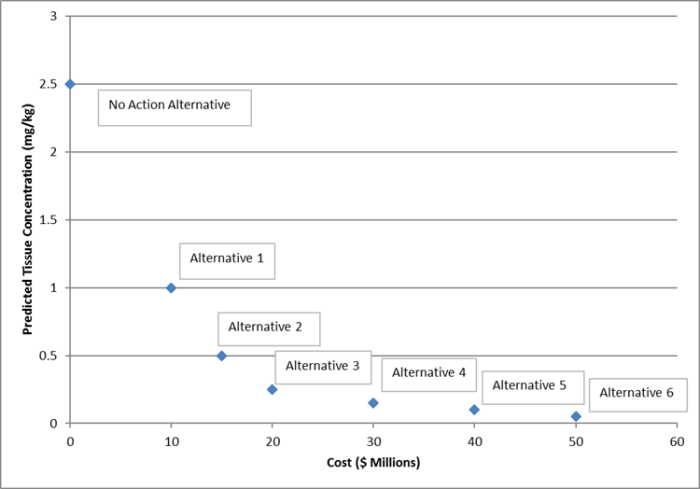
Figure 2-2. Risk reduction (represented by fish tissue concentration) versus cost of various alternatives.
Source: Modified from Bridges, Nadeau, and McCulloch 2012a, Figure 1.
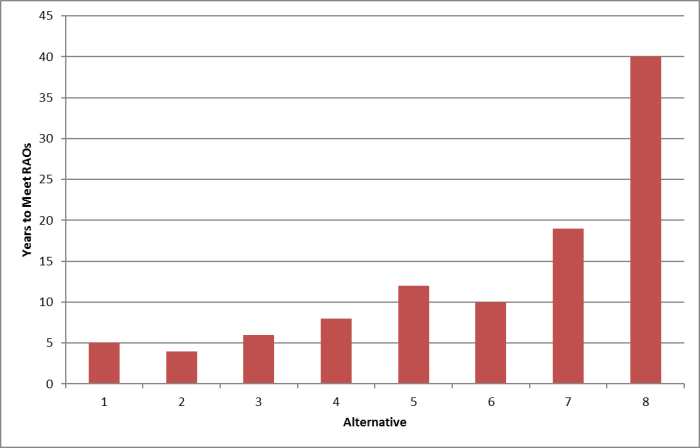
Figure 2-3. Time to achieve cleanup objectives for RAOs for all alternatives.
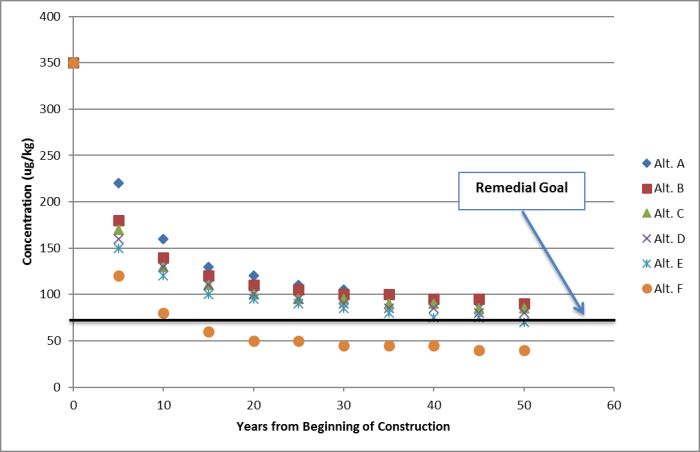
Figure 2-4. Estimated final concentration of COPC after implementation to demonstrate long-term effectiveness of each alternative.
Another tool for comparing alternatives is a cost-benefit analysis, in which the evaluation criteria are synthesized into one overall net benefit score for each alternative. Figure 2-5 presents an example stacked bar chart that summarizes the benefits for each alternative in comparison to the overall cost of the remedy. The evaluation should consider both positive effects, such as long-term effectiveness as measured through risk reduction, and negative effects, such as the adverse effects associated with implementation. Information presented in the graph can be evaluated to determine at what point the additional benefit achieved per additional dollar spent becomes very low. For example, as shown on Figure 2-5, as the alternatives become more aggressive (towards the right hand side of the graph), the weighted benefit becomes fairly constant while the cost increases dramatically. The weighting assigned to each benefit is a multi-criteria decision analysis that is subjective and site-specific. Different values and weightings may be assigned differently from site-to-site depending on the environmental, economic, and social burdens and benefits being applied to a particular site.
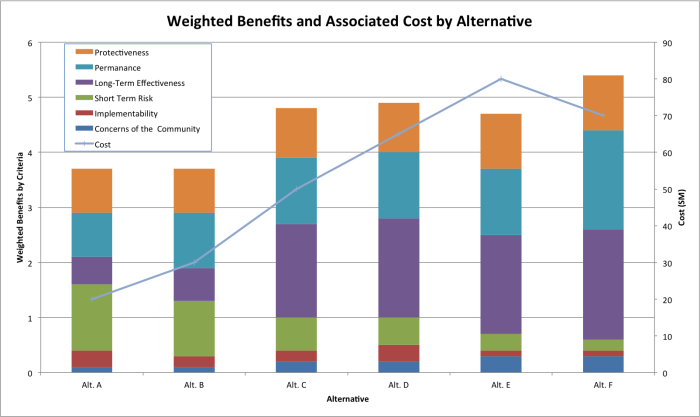
Figure 2-5. Weighted benefits and associated cost by alternative.
The comparative evaluation of alternatives requires a balancing of costs against the overall effectiveness of a remedy. Overall effectiveness can also be a narrative evaluation of the extent of risk reduction and the time to achieve this reduction and meet the established cleanup goals for a project. A knee of the curve analysis (or cost-benefit analysis) can help identify the relationship between cost and overall risk reduction. The tools presented in this section are only examples and may or may not be applicable to every contaminated sediment site. The exact nature of the evaluation tools will be a function of the regulatory requirements that the sediment site is being remediation under and the weight given the various criteria by the interested parties to the project.
2.9.1 Overall Protection of Human Health and the Environment
Protectiveness may be achieved through a combination of active remediation, MNR/EMNR, and institutional controls. When evaluating sediment remedial alternatives, be aware that project objectives related to protecting human health and the environment may not be met at the end of remedial action implementation without the incorporation of institutional controls. In addition, for many sites, MNR over some time frame will be required to meet the protectiveness criteria.
Site-specific cleanup goals for sediments are typically established based on either human health or ecological risk. In many cases, such as for persistent bioaccumulative and toxic contaminants, risk-based cleanup levels are well below background and not technologically achievable. In this instance, site cleanup levels should be established based on background levels consistent with current USEPA policy or state regulatory requirements.
Exposure of aquatic organisms to sediment typically takes place within the BAZ. As a result, in the cases where surface sediment does not exceed cleanup goals but surface sediment is contaminated, dredging to remove contamination deep within the sediment may not reduce risk to protective levels for human health or the environment. In cases where groundwater advectionBulk transport of the mass of discrete chemical or biological constituents by fluid flow within a receiving water. Advection describes the mass transport due to the velocity, or flow, of the water body. It is also defined as: The process of transfer of fluids (vapors or liquid) through a geologic formation in response to a pressure gradient that may be caused by changes in barometric pressure, water table levels, wind fluctuations, or infiltration. is transporting contamination into the BAZ, however, or where future events (such as dredging activities or episodic erosion events) have the potential to re-expose buried sediments, efforts to address subsurface sediment contamination may be required to meet RAOs.
Mass removed does not necessarily correspond to net risk reduction or long-term effectiveness. Analysis of surface contamination during the evaluation of remedial alternatives must consider the potential for exposure to subsurface contaminants to occur in the future. At sites where cleaner sediment has already buried sediment with higher contaminant concentrations, dredging for mass removal may result in higher risk as the sediment with higher concentrations is exposed or resuspended into the water column (thus increasing the post-dredge residual surface concentrations).
2.9.2 Compliance with Laws, Regulations, Permits, and Appropriate Requirements
In general, site remedies must comply with applicable laws, regulations, and permits. Under CERLCA, compliance with ARARs is required. In some instances certain administrative requirements may be waived as long as the substantive intent of the requirement is met. It is beyond the scope of this guidance document to describe the process whereby compliance with applicable laws, regulation and permits must be demonstrated or the process by which certain requirements may be waived.
Under CERCLA, ARARs include requirements that are applicable to the circumstances of the site as well as requirements that, while not applicable, are considered relevant and appropriate to the circumstances of the sites. Local ordinances, advisories, or guidance that do not meet the definition of ARARs are typically referred to as "to be considered" requirements. Three types of ARARs are described under CERCLA:
- chemical-specific requirements (concentration standards)
- location-specific requirements (restriction of remediation activities at sensitive or hazard-prone locations)
- action-specific requirements (typically treatment, removal, transportation, and disposal of hazardous waste)
With few exceptions (such as Washington State Chapter 173-204 WAC Sediment Management Standards), no numeric standards exist for sediments. Although most states have narrative water quality requirements that require sediment to be free from chemical constituents that pose a risk to human health or the environment, narrative requirements should be incorporated into the RAOs for the site based on the results of the baseline human health and ecological risk assessments. Screening values such as probable effects concentrations (PECs) are not ARARs and do not need to be achieved to meet threshold requirements though they may be used as screening criteria or other measures of risk. Location- and action-specific requirements may include the need to obtain water quality certifications, in-water work schedule windows, Clean Water Act and endangered species mitigation, and land disposal requirements.
2.9.3 Long-Term Effectiveness and Permanence
The evaluation of long-term effectiveness and permanence focuses on the risk remaining at the site following the implementation of the remedy and the effectiveness of any controls required to manage the risk posed by contaminated sediments left in place (for example, below sediment caps or backfill placed to manage residuals). The magnitude of residual risk is typically measured based on the level of contamination left in place, the volume or concentration of material managed through engineering and institutional controls, and the degree to which the remaining contamination remains hazardous based on the contaminant volume, toxicity, mobility, and propensity to bioaccumulate. The adequacy and reliability of engineering and institutional controls determines how the remedy limits future exposure and the potential need to replace technical components of the alternative (such as cap refreshment). For contaminated sediment sites, factors related to the potential for future exposure, such as groundwater migration and erosion potential, must be considered.
Active remediation (dredging, capping, or in situ treatment) causes short-term effects to the benthic environment and overlying surface water quality. These short-term effects must be balanced against long-term effectiveness. Water quality controls (such as a silt curtain, portable dam, or sheet pile containment), operational best management practices for dredging and placing materials, and in-water work schedule windows can minimize, but not eliminate, short term effects.
Containment remedies are effective and reliable in the long-term for sites where the sediment is stable and source control has been achieved, which is common even in rivers. At many sites, relatively high concentrations of persistent chemicals are present in the immediate vicinity of where source materials were discharged as long as 75 to 100 years ago. This situation occurs frequently in rivers and harbors adjacent to former coal gasification plants. These facilities may have been closed for decades, yet NAPL and PAH impacted sediments remain near the facilities. For these sites (if they are stable), in situ containment may be a reliable remedy.
For sites where dredging or isolation capping is used as the primary technology to meet cleanup goals based on specific chemical concentrations, short-term effects to the aquatic ecosystem are expected. RAOs are not likely be achieved until after recolonization of the site by benthic organisms and subsequent re-establishment of the ecosystem. In many situations the best remedy is a combination of technologies that uses dredging, capping, and in situ treatment (as a stand-alone technology or as a component of a reactive cap) to remediate source areas with the highest chemical concentrations and MNR/EMNR to reach final objectives. Capping and dredging are often used in combination where removal of contaminated sediments is required to allow cap placement or where thin layer placement of sand is required to prevent exposure to dredging generated residuals.
2.9.4 Reduction in Toxicity, Mobility, and Volume Through Treatment
This evaluation criterion addresses the evaluation of remedial actions that use treatment technologies that permanently and significantly reduce toxicity, mobility, or volume of the hazardous substances as their principal element. Areas of high concentration (hotspots) should be assessed to determine whether they represent principal threat material under CERCLA or some other regulatory threshold that may result in a preference for early treatment or removal. Under CERCLA, a preference exists for treatment to address the principal threats at a site through destruction of toxic contaminants, reduction of the total mass of toxic contaminants, irreversible reduction in contaminant mobility, or reduction of the total volume of contaminated media. At contaminated sediment sites, the evaluation of reduction in toxicity, volume, and mobility is primarily focused on the use of reactive materials to reduce contaminant mobility and bioavailability through direct placement (in situ treatment) or as part of a cap design (amended capping).
2.9.5 Short-Term Effectiveness
This evaluation criterion addresses effects due to the construction and implementation of an alternative until objectives are met. Under this criterion, alternatives should be evaluated with respect to their effects on human health and the environment during implementation of the remedial action. Monitoring releases during dredging or cap placement, and the duration of remedy implementation, are key factors in evaluating short-term effectiveness.
For sites where dredging or isolation capping is used as the primary technology to meet cleanup levels based on specific chemical concentrations, short-term effects to the aquatic ecosystem occur (from resuspended sediments or residuals). RAOs will not likely be achieved until after recolonization of the site by benthic organisms and subsequent re-establishment of the ecosystem. As with long-term effectiveness, in many situations the best remedy may be a combination of technologies that uses dredging or capping to remediate areas with the highest chemical concentrations and natural recovery to reach final RAOs.
2.9.6 Feasibility
Feasibility includes both technical and administrative components. A technical feasibility evaluation includes a site-specific determination of how active remediation would be implemented at the site, considering site-specific conditions and lessons learned from similar sites. Site access is an important consideration for sediment remedial actions, especially at former industrial sites where the responsible parties no longer own the property and residential development has occurred along the shoreline. Lack of access to areas to process materials can have a significant effect on the feasibility of alternatives. Additional factors to consider include availability of equipment and materials and disposal sites that may be needed. Note the distinct difference between technical feasibility evaluations of remedial alternatives and a technical impracticability (TI) waiver at a Superfund site. A TI waiver cannot be justified on cost alone; the remedy must be technically demonstrated to be non-implementable (USEPA 1993).
An administrative feasibility evaluation includes items such as permit approvals, right-of-entry (if the water body is not on land owned by the responsible parties), regulatory agency approvals, and resource agency approvals. Many sediment sites are on land owned and managed by federal, state, tribal, or local governments and therefore are subject to various laws, regulations, and policies that govern activities in the waterways. This situation can lead to restrictions on what can be done, how work is done, and when it can be performed. Additionally sites may include sensitive or critical habitat for threatened and endangered species or sites of historical importance. Both of these conditions will require administrative approval from those agencies directly responsible for implementation of the respective federal and state laws. If sediment removal is required at a historic site, then recovery of the historic artifact may be required in advance of remedy implementation, which will affect both schedule and costs.
2.9.7 Cost
Assessment of cost, as a remedial action alternative evaluation criteria, is often a complex undertaking. Not only is the financial cost of the remedy important, but costs must also be estimated for the loss of the use of the resources during remedy implementation. Many factors beyond the cost of the technology being evaluated must be considered, such as material costs, transportation costs, storage costs, and monitoring costs. As an example, costs for dredging and capping depend on a number of factors:
- volume and area to be dredged or area to be capped
- depth of water; costs are higher for shallow water depths (less than 5 ft) or deep water (greater than 50 ft)
- type of water body (river, harbor, lake, pond, mudflat, or other)
- site access and upland work areas at the site
- transport of contaminated sediments and capping material
- availability and location of sediment disposal sites
- sediment dewatering, water treatment and discharge permitting
- remedy effectiveness monitoring
- sediment physical properties
- sediment chemical concentrations
- sediment classification (hazardous or nonhazardous)
- quantity and type of debris in sediment
- schedule
When assessing cost for any alternative, consider seasonal restrictions and limits on work hours that may increase the time it takes to complete remedy construction. For example, in many regions of the country, in-water work is not allowed at certain times of the year in order to protect sensitive aquatic resources.
Site-specific variables may have a substantial impact on schedule and final cost of the alternative. Care should be taken to account for every possible major cost factor when making a final remedy selection.
2.9.8 Stakeholder and Tribal Acceptance
Solicit input from state and tribal stakeholders during the alternative evaluation process and incorporate their input into the decision making process. Stakeholder interests or concerns should be considered during the development of RAOs, as appropriate. Consideration of stakeholder interests and concerns should begin during the RI/FS process to develop early consensus regarding project goals. Consideration of stakeholder interests can become more critical during the development of remedial action alternatives (Section 8). Most sediment sites involve many more nonregulatory, or community, stakeholdersAffected tribes, community members, members of environmental and community advocacy groups, and local governments. than upland sites. These stakeholders may include:
- recreation and commercial users of the water bodies
- organizations representing recreational or commercial uses
- landowners along the shoreline
- owners of lands under the water (may be governments)
- local government representatives
- environmental protection organizations
- port management districts or organizations
Community acceptance will vary based on the nature of the community, the potential impacts of the cleanup, and the extent to which the contaminated sediment resource is valued. Failure to engage community stakeholders in the process could result in unacceptable delays in the remedial process.
2.9.9 Green and Sustainable Remediation
Green and sustainable remediation (GSR) is becoming increasingly important in site remediation. Aspects of GSR are being introduced into decision making throughout the site remediation process, from investigation through design and monitoring. ITRC's Green and Sustainable Remediation: A Practical Framework (ITRC 2011b) presents a GSR planning and implementation framework, provides definitions of the GSR components, references GSR tools, and offers a discussion of GSR integration into various stages of the site remediation process. The key GSR concepts relevant to sediment remediation include the following:
Protectiveness
As global pressures to save energy and limit greenhouse gas (GHG) emissions increase the definition of protection may, from some perspectives, include a balance of local benefits of sediment cleanup with global environmental costs.
Compliance with ARARs
ARARs incorporate sustainability-related considerations, such as sensitive habitats and wetlands. This criterion could be expanded to include social settings such as schools, environmental justice zones, or densely populated areas representing the social component of sustainability. Ultimately local or national laws may need to regulate activities related to factors such as GHG emissions or fuel usage to be included in the category of ARARs. In such cases, technologies with a large environmental footprint may not be selected as a final remedy.
Effectiveness
Effectiveness is a broad concept that can incorporate GSR. The ability to achieve and maintain cleanup levels in light of recontamination (due to background or lack of source control) is a form of sustainability that should be considered. However, additional aspects of effectiveness can include: whether the remedy achieves the desired social benefits to the community and whether the remedy effectively promotes ecological restoration. Almost any target attribute can be considered under this criterion.
Reduction in Mobility, Toxicity, and Volume
Reduction of mobility, toxicity, and volume can promote sustainability by encouraging remedies other than removal. Although many new in situ treatment technologies for sediment are still emerging or evolving, these technologies hold promise as remedies with reduced intrusiveness. However, ex situ treatment technologies that are energy intensive or require large-scale removals may not meet sustainability objectives.
Short-Term Effectiveness
Short-term effectiveness is a result not only of the remedy functioning quickly, but also of the incidental adverse effects caused by remedy implementation. Social impacts of GSR (such as noise, traffic, loss of use of the resource, air impacts) are considered here. Large-scale sediment removal projects are often associated with negative short-term social effects. However, these affected communities may also benefit socially and economically from resources that are restored in a shorter time frame. Communities may also benefit from other economic considerations such as use of local labor and supplies as well as ancillary use of food and lodging (especially for long-duration projects).
Feasibility
Feasibility encompasses both the technical and administrative feasibility. As with ARARs, a growing body of legislation may eventually restrict activities that do not meet GSR criteria.
Cost
The economic impact includes the actual cost of the remedy as well as economic impact to the community. The “cost” is not simply an accounting of dollars spent: the true cost must account for the direct and indirect impacts to the environment, community, and site workers. Sediment dredging, dredged material processing, water treatment, and disposal consume large quantities of energy and other resources, which results in direct negative effects on the environment. For sites where off-site disposal of dredged material is performed, each truck driven to the landfill burns fuel, releasing air pollutants adding to the carbon footprint, and increases traffic congestion. Although cost has always been a balancing consideration in remedy selection, as a key component of the GSR triad, cost must consider the broader metrics. These costs to society can be balanced with the long-term costs of not remediating the resource in terms of lost economic value, recreational hours (economic), human health cost due to exposure (multiple generations when it is in the regional food chain), quality of life, productivity issues for workers, compromised habitat and fisheries (tribal hunting and fishing rights as well as commercial fisheries), bioaccumulation in aquatic wildlife with wide aquatic range, and endangered species. It is therefore essential that resources be focused on remediation that provides the most benefit. Often times, once a community has had contamination removed from its waterfront development area, it begins to prosper.
2.9.10 Habitat and Resource Restoration
In many instances, full recovery of an ecosystem at contaminated sediment sites requires habitat and resource restoration in conjunction with site remediation. CERCLA allows for natural resource damage assessments (NRDA) and the recovery of damages by natural resource trustees for the loss of resources associated with the release of hazardous substances. Coordination with the natural resource trustee agencies is recommended to facilitate the incorporation of NRDA restoration activities into sediment site remedies where applicable.
In addition to NRDA, mitigation may be required under the Clean Water Act (CWA)Rule passed in 1972 that mandates “fishable/swimmable” waters wherever attainable. Provides for (1) a construction grants program for publicly owned water treatment plants and requires plants to achieve the equivalent of secondary treatment; (2) a permit system to regulate point sources of pollution; (3) area wide water quality. or the Endangered Species Act (ESA) for the unavoidable loss of resources (such as shallow water habitat) or impacts to endangered species. The cost of CWA or ESA mitigation activities should be incorporated into the evaluation of sediment remedies. Furthermore, these costs can be minimized through incorporation of habitat improvements into the site remedy. For example, the incorporation of a habitat layer into a sediment cap may be considered adequate to eliminate the need for additional CWA or ESA mitigation.
2.9.11 Watershed Considerations
Watershed-wide contamination from nonpoint runoff or atmospheric deposition may limit the degree of risk reduction that sediment remediation can achieve. In addition, releases from other sites or urban stormwater may recontaminate a sediment site under remediation or limit the effectiveness of MNR and EMNR. As a result, all sediment sites should include the development of a CSM that identifies watershed inputs and characterizes background conditions. Consider the degree and time frame of source control efforts when evaluating sediment remedies. For example, are upstream sediment sites expected to be remediated in the near future? Are requirements in place for the future control of combined sewer overflow discharges? Are atmospheric sources derived from the watershed at levels that will support attainment of PRGs or is attenuation of these sources also necessary to eventually achieve the targets?
2.9.12 Future Land and Waterway Use Considerations
Consider future land and waterway use in the development and evaluation of remedial action alternatives as presented in Table 2-3. All site remedies must be compatible with reasonably anticipated future land and waterway use considerations. For example, the remedy should anticipate whether the site is expected to be a future recreational area, habitat area, residential development area, or industrial area with berthing facilities, because future use significantly influences the feasibility of sediment remedies. Future conditions are often uncertain, however, so consider the degree of this uncertainty when evaluating remedial action alternatives. Additionally, consider watershed goals though coordination with stakeholders throughout the remedy selection process.
Publication Date: August 2014